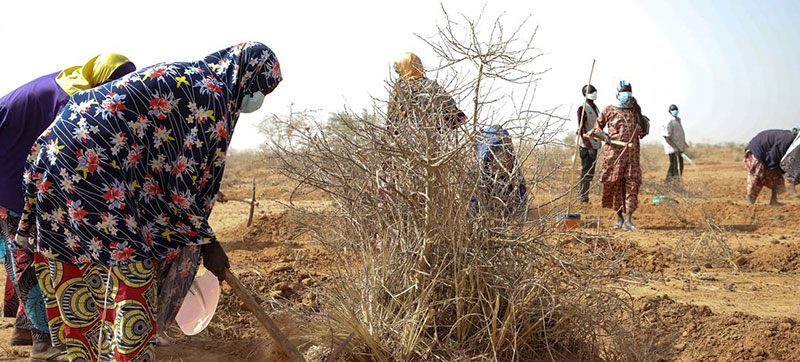
 Sahel Food Crisis
Africa’s Sahel region facing ‘horrendous food crisis’
New York: As the Sahel region “stares down a horrendous food crisis”, the UN emergency food relief chief warned on Wednesday that the number of people on the brink of starvation has “increased almost tenfold” over the past three years and “displacement by nearly 400 per cent”.
The vast Sahel, which runs nearly the breadth of the continent, south of the Sahara Desert, is experiencing some of its driest conditions in years.
“An absolute crisis is unfolding before our eyes”, WFP Executive Director David Beasley said from Benin, having just visited the agency’s operations in Niger and Chad.
Insecurity, poverty, inflation
In just three years, the number of people facing starvation has skyrocketed from 3.6 to 10.5 million, in the Sahelian nations of Burkina Faso, Chad, Mali, Mauritania and Niger.
And insecurity, COVID-induced poverty, dramatic food cost increases and other compounding factors, have put those countries and others in the region, on a trajectory that would surpass any previous crises.
“I’ve been talking with families who have been through more than you can possibly imagine”, Mr. Beasley said. “They have been chased from their homes by extremist groups, starved by drought and plunged into despair by COVID’s economic ripple effects”.
Rock bottom support
While the needs are sky high, resourcing to support the vulnerable is at rock bottom, forcing WFP into the difficult position of having to take from the hungry, to feed the starving, he said.
For example, funding shortages in Niger mean that WFP is halving food rations.
The UN food relief agency requires $470 million for the next six months to continue operations in the Sahel.
Despite a challenging security context, last year WFP worked with humanitarian partners there to maintain lifesaving support for 9.3 million people across the five countries.
Helping to change lives
WFP has also been implementing resilience-building programmes to help families thrive.
Over the last three years, it has partnered with communities to turn 270,000 acres of barren Sahel fields into productive agricultural and pastoral land, changing the lives of over 2.5 million people.
Communities that have benefited from the resilience building activities there, have been empowered to grow enough food to feed themselves and diversify their productions and income – faring relatively better against the unprecedented food crisis.
Conflict across borders
Meanwhile, the threat of conflict spilling across from neighbouring Burkina Faso and Niger is leaving Benin on tenterhooks.
And despite that the Government-funded school-feeding programme – jointly implemented by WFP – provides nutritious meals to 700,000 children and has been vital for creating jobs and strengthening the local economy, Mr. Beasley warned that the situation remains dire.
“We’re running out of money, and these people are running out of hope,” he said.
Support Our Journalism
We cannot do without you.. your contribution supports unbiased journalism
IBNS is not driven by any ism- not wokeism, not racism, not skewed secularism, not hyper right-wing or left liberal ideals, nor by any hardline religious beliefs or hyper nationalism. We want to serve you good old objective news, as they are. We do not judge or preach. We let people decide for themselves. We only try to present factual and well-sourced news.
Support objective journalism for a small contribution.