After nuclear deal, Iran must now focus on human rights: UN expert
“Peace, development and human rights are deeply interlinked,” declared UN Special Rapporteur Ahmed Shaheed, who is mandated by the UN Human Rights Council to monitor and report on the situation in Iran, in a news release issued earlier on Wednesday.
“It is my sincere hope that the successful conclusion of the nuclear talks, which will enable the lifting of economic sanctions, will allow President Hassan Rouhani to focus on his other campaign pledges, specifically those to promote the enjoyment of all human rights by the Iranian people.”
Shaheed has long voiced concern about the impact of economic sanctions on the human rights situation in Iran in various reports presented to the UN General Assembly and the Human Rights Council.
In particular, he has noted that the increasing economic hardships caused by the sanctions have unleashed staggering inflation and generated serious concern regarding protections for the rights to food and health in the country.
“Economic sanctions have directly or indirectly affected all sectors of the country. They appear to have contributed to the conditions of austerity including the rising costs of basic commodities, and have seemingly impacted access to medicines, and medical supplies,” the UN expert continued.
He said, “These circumstances have had a dramatic effect on the standard of living and likely further undermined the full enjoyment of a range of civil, social and economic rights.”
At the same time, the Special Rapporteur urged the Iranian Government to spare no effort in addressing the long-standing human rights concerns repeatedly raised by the UN, including the alarming rise in executions over the past year, increasing restrictions on freedom of expression and peaceful assemblies, women’s rights, discrimination against religious and ethnic minorities, and the ongoing prosecution of journalists, lawyers and human rights defenders.
Most recently, Shaheed has expressed concern about the arrest, detention and trial of Jason Rezaian, a Washington Post reporter, and his wife, Yeganeh Salehi, a correspondent of the United Arab Emirates newspaper The National.
Rezaian’s trial began in late May in Teheran behind closed doors on charges of ‘espionage, collaboration with hostile governments, gathering classified information and disseminating propaganda against the Islamic Republic.’ The journalist has been arbitrarily detained since July 2014, including for a number of months in solitary confinement, and wasn’t formally charged for nearly 10 months.
Independent experts or special rapporteurs such as Shaheed are appointed by the Geneva-based Human Rights Council to examine and report back on a country situation or a specific human rights theme. The positions are honorary and the experts are not UN staff, nor are they paid for their work.
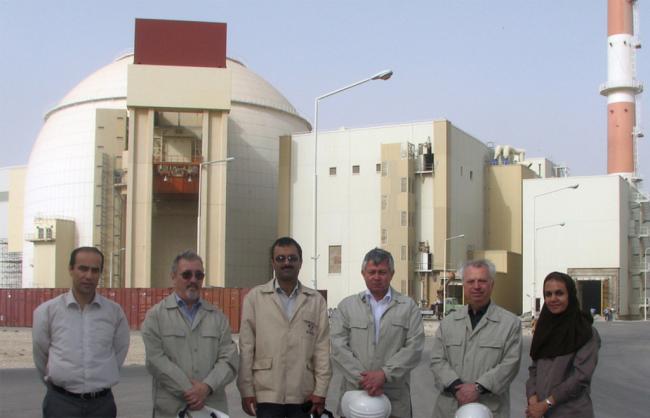
Photo: IAEA Imagebank
Support Our Journalism
We cannot do without you.. your contribution supports unbiased journalism
IBNS is not driven by any ism- not wokeism, not racism, not skewed secularism, not hyper right-wing or left liberal ideals, nor by any hardline religious beliefs or hyper nationalism. We want to serve you good old objective news, as they are. We do not judge or preach. We let people decide for themselves. We only try to present factual and well-sourced news.
Support objective journalism for a small contribution.