Alarming level of reprisals against activists, human rights defenders, and victims – new UN report
New York, Sept 13 (IBNS): An alarming and “shameful” level of harsh reprisals and intimidation against those who cooperate with the United Nations in an effort to uphold human rights, has been revealed by a new UN report launched on Wednesday.
The ninth annual report of Secretary-General António Guterres details the level of retaliation against human rights defenders on a country-by-country basis, including allegations of killing, torture, arbitrary arrests, and public stigmatization campaigns, which also target victims of rights abuse.
The report documents allegations of reprisals and intimidation in 38 countries, some of which are members of the Human Rights Council.
Prior to officially presenting the Human Rights Council with the report next week, assistant rights chief Andrew Gilmour said: “The cases of reprisals and intimidation detailed in this report and its two annexes represent the tip of the iceberg,” adding that “many more are reported to us.”
“We are also increasingly seeing legal, political and administrative hurdles used to intimidate – and silence – civil society,” he flagged.The report points out that selective laws and new legislation are restricting and obstructing organizations from cooperating with the UN, including by limiting their funding capacity, especially from foreign donors.
The report points out that selective laws and new legislation are restricting and obstructing organizations from cooperating with the UN, including by limiting their funding capacity, especially from foreign donors.
According to the report, the fear of reprisals is not only visible in the field, where UN personnel often encounter people who are too-frightened to speak with them, but also at what would perhaps be regarded as safe spaces such as UN Headquarters in New York, Geneva and elsewhere.
Against the backdrop of numerous non-governmental organizations, human rights defenders, activists and experts having been labelled “terrorists” by their governments, it highlights a “disturbing trend” of national security and counter-terrorism strategies used to block UN access to communities and civil society organizations.
“The real global threat of terrorism notwithstanding, this issue must be tackled without compromising respect for human rights,” the report says.
The wide scope of reprisals greatly inhibits the UN’s work, including in conflict settings, when delivering humanitarian assistance or in protecting civilians, it adds.
The report recognizes the need for more information collection on acts of intimidation and reprisal, including by documenting and analyzing incidents experienced by women, human rights defenders and lesbian, gay, bisexual, transgender and intersex persons. It also encourages all stakeholders to report allegations of intimidation and reprisals for cooperating with the UN on human rights as they occur, to ensure follow-up and action.
“As the Secretary-General has said, we should all be deeply shocked and angered by the extent to which civil society actors suffer reprisals because of their work, including when they cooperate with the UN,” Gilmour said.
“But shock and anger must translate into real action,” he continued. “Governments can do much more to stop reprisals, ensure that they do not recur, and hold those responsible to account for their actions.”
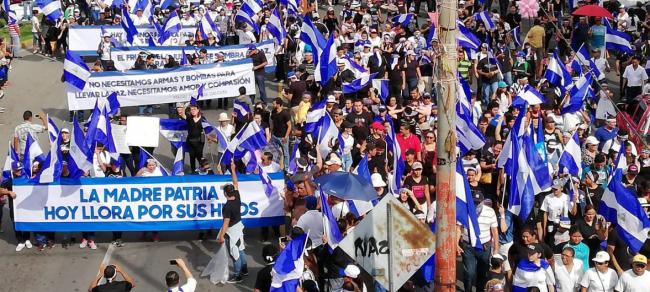
Álvaro Navarro/Artículo 66
Support Our Journalism
We cannot do without you.. your contribution supports unbiased journalism
IBNS is not driven by any ism- not wokeism, not racism, not skewed secularism, not hyper right-wing or left liberal ideals, nor by any hardline religious beliefs or hyper nationalism. We want to serve you good old objective news, as they are. We do not judge or preach. We let people decide for themselves. We only try to present factual and well-sourced news.
Support objective journalism for a small contribution.