As Yemen crisis deepens, UN food relief agency calls on warring factions
“We appeal to all warring parties to the conflict to allow us to replenish our food and fuel stocks to save lives,” said Purnima Kashyap, WFP Representative and Yemen Country Director in a statement to the press.
“We have prepositioned food in the last few days before the fighting flared up but we are struggling to reach people due to the deteriorating security situation,” Kashyap added.
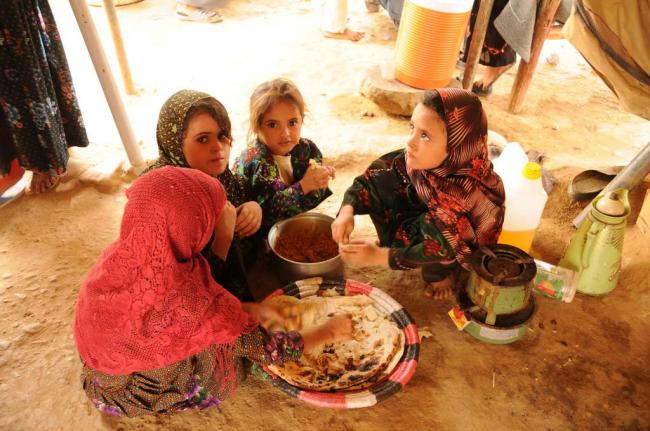
Two weeks of escalating violence have left many Yemenis hungry, trapped inside their cities and villages with food stocks running low. There are also severe fuel shortages, especially in Aden and areas of the capital, Sana’a.
The situation is of particular concern because almost half of the population of Yemen is food-insecure, struggling to grow or buy food.
WFP in 2014 found that 10.6 million people, or 41 per cent of the population in Yemen, were food insecure. Of these, 5 million people were found to be severely food insecure and in need of food assistance.
It is estimated today, following the escalation of violence, that more than 12 million Yemenis are food insecure. Yemen imports almost 90 per cent of its basic food from abroad.
Hence, WFP is extremely concerned that the impact of traders being unable to import food and move it inside the country will affect people’s ability to feed their families, especially the poor and most vulnerable.
In most of the areas worst hit by the conflict, shops and food markets are closed and the supply of food and other essentials has been seriously disrupted.
An interagency rapid assessment of the humanitarian situation in Aden showed that access to food is one of the most serious problems in all locations, with shops closed or people unable to leave homes to go to markets.
Lack of cooking gas and increasing food prices have been also reported in many parts of the governorate.
WFP provided food assistance in the last few days to cover April and May needs to 16,000 refugees, mainly Somalis, in Kharaz camp outside of Aden. WFP has also provided a two-month food ration to over 13,000 people in Mazraq I and III camps, mostly displaced by the earlier conflict in the northern Sa’ada region.
The agency also provides cash transfers to severely food-insecure households in addition to the monthly cash assistance they already receive from the government. In Lahj, Marib, and Sana’a, WFP distributed nearly $1 million in this way to more than 76,000 people.
In related news, the United Nations has announced that Jamal Benomar, the Special Adviser to the Secretary-General on Yemen, has expressed an interest in moving on to another assignment.
A successor shall be named in due course. Until that time and beyond, the UN will continue to spare no efforts to re-launch the peace process in order to get the political transition back on track.
Benomar has spent the past four years working closely with the Yemenis to realise their legitimate aspirations for democratic change fulfilled.
On behalf of the Secretary-General, Benomar brokered the Transition Agreement in November 2011, facilitated the successful conclusion of the National Dialogue Conference in January 2014 that took 10 months of deliberations, and mediated the Peace and National Partnership Agreement in September 2014.
More recently, Benomar chaired and facilitated all-inclusive negotiations for over two months to get the transition back on track. Unfortunately, this process was interrupted with the dramatic escalation of violence.
Photo: WFP Middle East and North Africa region (MENA).
Support Our Journalism
We cannot do without you.. your contribution supports unbiased journalism
IBNS is not driven by any ism- not wokeism, not racism, not skewed secularism, not hyper right-wing or left liberal ideals, nor by any hardline religious beliefs or hyper nationalism. We want to serve you good old objective news, as they are. We do not judge or preach. We let people decide for themselves. We only try to present factual and well-sourced news.
Support objective journalism for a small contribution.