October 05, 2026 02:38 pm (IST)

Follow us:


"ASEAN leaders accept need for deeper integration and inclusive growth"
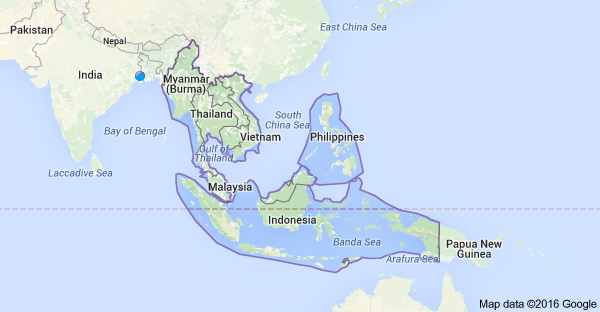
Kuala Lumpur, Jun 1 (IBNS) For ASEAN to achieve both growth and inclusion, countries in the region are required to pursue greater integration and their respective agendas of reform and liberalization, five South-East Asian leaders told nearly 600 business, government and civil society participants in the opening plenary of the 25th World Economic Forum on ASEAN.
“The prize must be taken,” said Mohd Najib Bin Tun Abdul Razak, Prime Minister and Minister of Finance of Malaysia. “The great opportunities it promises will not miraculously appear without our continued efforts to reform, liberalize and integrate.”
While the region launched the ASEAN Economic Community (AEC) single-market initiative in 2015, significant impediments to real integration such as the lack of common documentation requirements, whether for pharmaceutical products or port entry, remain, Najib reckoned.
“The AEC will never reach true fruition if we do not work to eradicate these barriers. These are the kinds of issues that have to be tackled head-on for us to reach that horizon. They are complex, detailed and require an extraordinary amount of coordination,” said Najib.
He said: “What is required is nothing short of a complete transformation if ASEAN is to achieve its potential. We need a transformation of rules, procedures and habits. But we also need a transformation of the mind, as we learn to think of ourselves more as ASEAN, act as ASEAN, and then reap the benefits of being ASEAN.”
The global economic crisis and the rebalancing of the Chinese and Indian economies have made it more challenging for countries in the region to maintain high growth, Samdech Techno Hun Sen, Prime Minister of Cambodia, said in his remarks.
“ASEAN countries themselves are competing within the organization, each trying to attract investment. We have to have some coordination – or else our production will make little profit, ” said he.
Rui Maria de Araújo, Prime Minister of Timor-Leste, said that, since gaining independence, his country’s priority has been to secure peace and stability, build up the state institutions and promote reconciliation in society and with neighbouring Indonesia.
Another key challenge is to deal with the “huge skills mismatch” in the labour market, especially with 60% of the population under the age of 25. The government is also focusing on the inclusion of women. “We believe that, with the integration of the societies and communities in ASEAN and our internal reforms, we will be able to meet the challenges we are facing.”
In Indonesia’s programme for inclusive growth, “our first priority is infrastructure – everything including electricity and roads,” Jusuf Kalla, Vice-President of Indonesia, said.
The government is also working on increasing agricultural productivity and to create more jobs in manufacturing. He also argued that ASEAN economies should cooperate so they do not push labour prices down.
Vietnam is pursuing a similar reform agenda, concentrating on economic restructuring, infrastructure development and the upgrading of the education system, Trinh Dinh Dung, Deputy Prime Minister of Vietnam, said.
He noted that his country also boasts a very young population. “These are not small challenges, but they are a matter of competitiveness and the quality of growth so we are accelerating reforms and integration.”
Earlier, in a video message, Klaus Schwab, Founder and Executive Chairman of the World Economic Forum, told participants that South-East Asia is at an important crossroads. “ASEAN on the one hand offers so many opportunities and has such great potential but on the other hand has to prepare for the future,” he said. “The future will be very much dominated by the notion of being in the Fourth Industrial Revolution. We will need new skills. We will need very deep cooperation for infrastructure and in the political, economic and social fields.”
He concluded: “The ASEAN countries have the potential to be in the lead in the Fourth Industrial Revolution.”
Support Our Journalism
We cannot do without you.. your contribution supports unbiased journalism
IBNS is not driven by any ism- not wokeism, not racism, not skewed secularism, not hyper right-wing or left liberal ideals, nor by any hardline religious beliefs or hyper nationalism. We want to serve you good old objective news, as they are. We do not judge or preach. We let people decide for themselves. We only try to present factual and well-sourced news.
Support objective journalism for a small contribution.
Latest Headlines