Attacks on women journalists on the rise, online and off – UNESCO
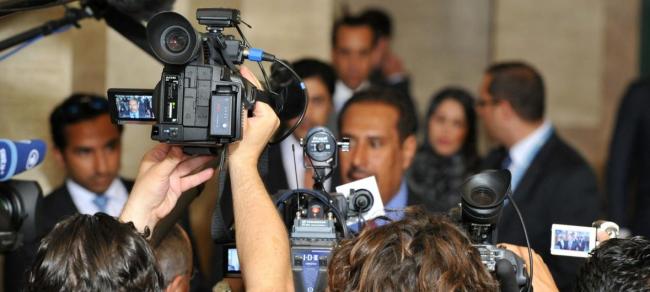
New York, Mar 24 (JEN): Over the past 15 years there has been “a marked increase” in cyber harassment, making the safety of women journalists a major issue for reportage in today’s digital era, participants highlighted Thursday at a United Nations event.
“In Slovakia we see the murder of an investigative journalist, with his fiancé murdered alongside him,” so not only were women journalists in danger, but women in general, according to Alison Smale, the head of UN global communications.
She made this chilling observation during an event held on the side lines of 62nd UN Commission on the Status of Women (CSW), which has been running at UN Headquarters in New York since last week and will wrap up on 23 March.
The UN Educational, Scientific and Cultural Organization (UNESCO) convened the panel discussion, entitled Safe Journalists, Strong Democracies: How on and offline attacks on women journalists are hurting us all, drawing attention to numerous ways women journalists can be placed in vulnerable settings – in the workplace, the field and online – leaving them open to harassment, intimidation and violence.
Calling the Slovakia incident “absolutely grotesque,” the UN Under-Secretary-General for Global Communications, herself a former journalist, recognized the “huge value of the UN, which pledges to discuss and try to deal with everything, for example, “a workshop like this.”
Chairing the event, Guy Berger, UNESCO Director of Freedom of Expression and Media Development, highlighted the UNESCO World Trends in Freedom of Expression and Media Development report, which with a special focus on gender equality in the media provides an essential perspective to understand the changing global media landscape.
On a upbeat note, he displayed one chart showing that the number of States responding to UNESCO’s request for more information on the judicial follow-up of journalists’ killings went from 30 to 75 per cent, showing progress that Governments are becoming increasingly more sensitized.
“Unfortunately,” he said, “you still have only one out of 10 cases of killings of journalists being resolved.”
Under the framework of the UN Plan of Action on the Safety of Journalists and Issue of Impunity, panellists shared their first-hand experiences of these threats and consequences on the press’ fundamental role in strengthening democratic societies.
Maria Ressa, former CNN correspondent and Founder, Editor, Director and Chief Executive of online publication Rappler, has faced “orchestrated trolling and instigated mob misogyny.”
“With technology and social media, women are targeted” online more than men, she said, elaborating that a Rappler study in the Philippines of online, State-sponsored hate revealed that the Government aimed to stifle any type of dissent.
She spoke about weaponized propaganda and gender-charged attacks against her and other female journalists there.
“The only defense we’ve had is to shine a light” on the attacks with a “frequency that only technology allows,” said Ms. Ressa, adding that the day after running an expose showing the data, “I received for one month exactly […] an average of 90 hate messages per hour.”
Her story is featured in UNESCO’s publication An Attack on One is An Attack on All.
Support Our Journalism
We cannot do without you.. your contribution supports unbiased journalism
IBNS is not driven by any ism- not wokeism, not racism, not skewed secularism, not hyper right-wing or left liberal ideals, nor by any hardline religious beliefs or hyper nationalism. We want to serve you good old objective news, as they are. We do not judge or preach. We let people decide for themselves. We only try to present factual and well-sourced news.
Support objective journalism for a small contribution.