 Bangladesh
Bangladesh Polls: Tarique Rahman-led BNP secures 'absolute majority' with 151 seats in historic comeback
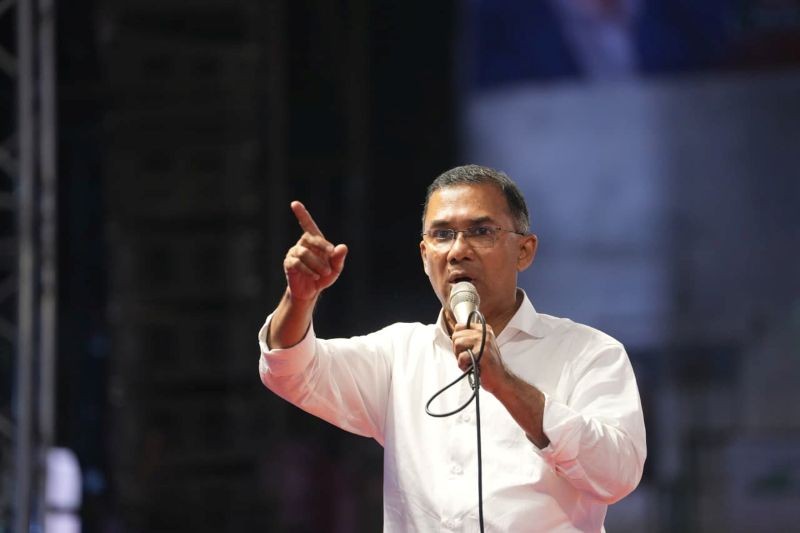
Bangladesh Nationalist Party (BNP), led by Tarique Rahman, has staged a dramatic comeback in Bangladesh’s 13th national parliamentary elections, securing 151 constituencies, according to early vote-counting trends.
As per trends available at 8 am (IST), Bangladesh Jamaat-e-Islami has emerged as the principal opposition force, winning 43 seats.
With 151 seats required for a simple majority in the 300-member Jatiya Sangsad, the BNP appears poised to return to power after several years. The polls come at a critical juncture for the country, which has witnessed political turbulence since the fall of the Awami League-led government on August 5, 2024.
According to reports, BNP Chairperson Tarique Rahman has won from Dhaka-17 and Bogra-6 constituencies.
Voting was conducted in 299 of the 300 seats, with polling in Sherpur-3 postponed following the death of a candidate. Citing Election Commission data, the Dhaka Tribune reported that voter turnout stood at 47.91% across 36,031 centres as of 2 pm on Thursday.
The counting process includes both parliamentary ballots and pink referendum ballots, which are being tallied simultaneously.
Referendum on political reforms adds historic dimension
Alongside parliamentary voting, citizens also participated in a national referendum on the proposed July Charter.
The reform package aims to introduce term limits for the prime minister, strengthen institutional checks on executive authority, and curb the excessive concentration of parliamentary power.
The referendum’s outcome could significantly shape Bangladesh’s constitutional and institutional trajectory, potentially marking a shift toward deeper governance reforms in the Muslim-majority nation.
Tarique Rahman’s return and BNP’s resurgence
Tarique Rahman, son of former prime minister Khaleda Zia, returned to Bangladesh in December after 17 years in self-imposed exile.
Since his return, he has positioned the BNP as the principal challenger in what many observers describe as the country’s first genuinely competitive election since 2009. Rahman has pledged to restore democratic institutions, reinforce the rule of law, and revitalise the economy if elected.
The BNP’s main rival in this contest has been a Jamaat-e-Islami-led coalition that includes the newly formed National Citizen Party (NCP). The NCP, led by Gen Z activists associated with the 2024 uprising, aligned with Jamaat after failing to translate street protests into broad-based electoral support.
Interim government and international oversight
The election was overseen by an interim administration headed by Nobel Peace Prize laureate Muhammad Yunus, which pledged to ensure free, fair, and peaceful polls.
Approximately 500 foreign observers, including representatives from the European Union and the Commonwealth, monitored the electoral process.
With more than 1,981 candidates contesting nationwide, including 109 women, the results are set to determine not only the composition of Parliament but also the broader direction of Bangladesh’s political evolution.
Support Our Journalism
We cannot do without you.. your contribution supports unbiased journalism
IBNS is not driven by any ism- not wokeism, not racism, not skewed secularism, not hyper right-wing or left liberal ideals, nor by any hardline religious beliefs or hyper nationalism. We want to serve you good old objective news, as they are. We do not judge or preach. We let people decide for themselves. We only try to present factual and well-sourced news.
Support objective journalism for a small contribution.