October 05, 2026 05:09 am (IST)

Follow us:


Bangladesh: UN welcomes payments to survivors of factory collapse
New York, Apr 24 (IBNS): One year after the global garment industry's worst industrial accident, the fund chaired by the United Nations to compensate victims of Bangladesh's Rana Plaza factory collapse has begun issuing its initial round of payments, as efforts to address the root causes of the disaster continue.
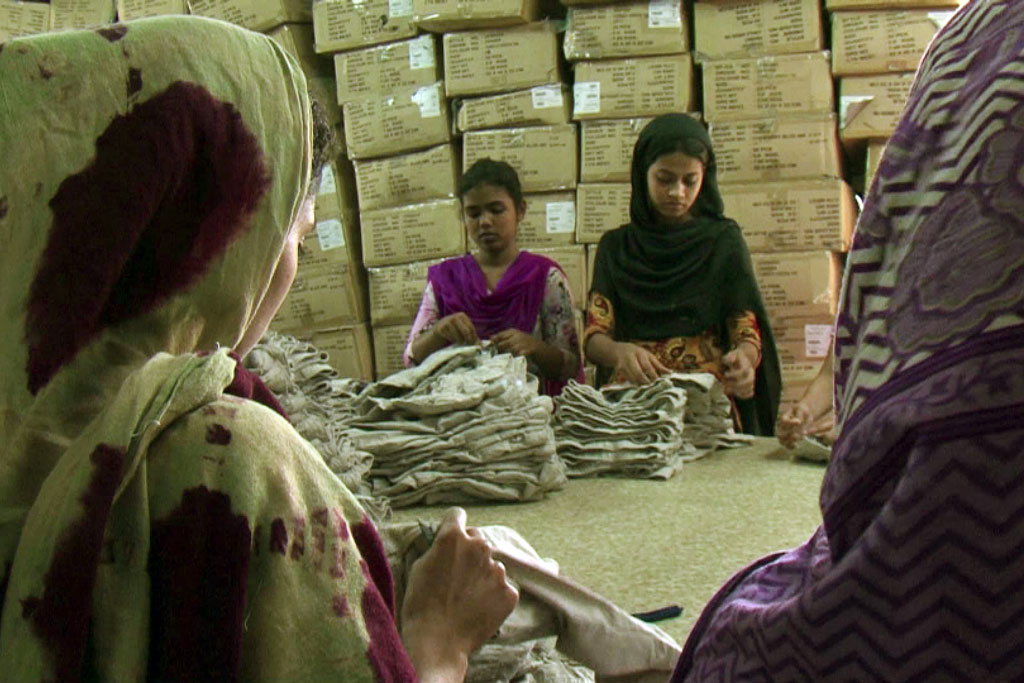
The Coordination Committee, chaired by the International Labour Organization (ILO), on Tuesday paid 50,000 BDT (Bangladeshi Taka) – about USD 645 – to each victim and the families of those who died in the 24 April tragedy, when the factory collapsed on the outskirts of Dhaka, the capital, killing more than 1,000 mostly female workers, and wounding thousands more.
“These initial payments are good news, now it needs to be ensured that all legitimate claims are honoured and that the injured victims or their surviving families receive full entitlements for their losses,” said Gilbert Houngbo, ILO Deputy Director-General for Field Operations and Partnerships, welcoming the payments that were announced at a ceremony in Dhaka.
“More donations to the Rana Plaza Trust Fund are needed to reach the USD 40 million target and ensure fair treatment for victims and their families, who are struggling to rebuild their lives,” Houngbo added.
According to a news release, this first round of payments, which also includes non-injured workers present at the factory at the time of the accident, is in line with the decision of the Coordination Committee to provide all victims a meaningful sum in advance of the 24 April anniversary of the factory collapse.
The Rana Plaza Arrangement and its Geneva-based Trust Fund were set up in September 2013 and are supported by voluntary contributions made by global brands and others. The Fund has so far received only about USD 15 million of the approximately USD 40 million total estimated amount calculated to compensate all the workers, according to the ILO.
“Our first priority is to get compensation to the victims,” Houngbo said in a video statement, adding that ILO is also set to work with the Government of Bangladesh and the wider international community to tackle “structural challenges” so incidents such as the Rana Plaza collapse never occur again, and to help Governments achieve the minimum institutional capacity to ensure safe working environments for garment workers.
He said the ILO was backing a systemic approach that ensures that any policy measures are implemented in ways that keep productive capacities competitive. Such an approach would protect and promote workers’ rights and improve living and working conditions.
While the issue was a priority matter for Bangladesh and other major garment-producing countries, Houngbo stressed that “everybody has to do their part” – from consumers, who might be asked to pay USD 1 or 1 euro more to ensure safe working conditions and improved livelihoods, to employers, workers’ unions and major corporations.
There would need to be a major effort to ensure that that extra dollar or euro “goes to the workers pockets and does not end up at the contractor or subcontractor level. These are the issues that we will be examining with the international community in months and years to come,” he said.
Houngbo, who is in Dhaka ahead of the anniversary, is due to meet with the Prime Minister of Bangladesh, Government ministers, employers’ and workers’ organizations, ambassadors and representatives of initiatives involved in improving working conditions in the country’s ready-made garment sector.
Thursday he is expected to address a high-level event – One Year after Rana Plaza: Progress and the Way Forward – organized by the Government of Bangladesh and the ILO.
(Garment workers at a factory in Bangladesh. Source: Screen capture from ILO video)
Support Our Journalism
We cannot do without you.. your contribution supports unbiased journalism
IBNS is not driven by any ism- not wokeism, not racism, not skewed secularism, not hyper right-wing or left liberal ideals, nor by any hardline religious beliefs or hyper nationalism. We want to serve you good old objective news, as they are. We do not judge or preach. We let people decide for themselves. We only try to present factual and well-sourced news.
Support objective journalism for a small contribution.
Latest Headlines