 Bangladesh
Bangladesh's GDP growth to decelerate to 4%: World Bank
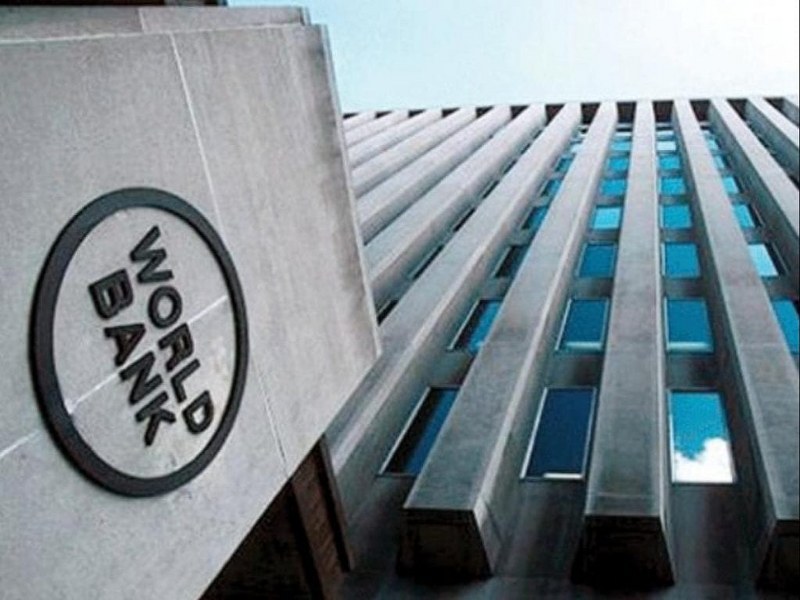
Dhaka/IBNS: Bangladesh's post-Covid recovery remains hampered by high inflation, a balance of payments deficit, financial sector vulnerabilities, and limited job opportunities for its youth, particularly women and educated individuals, according to the World Bank's latest biannual report released on Tuesday (Oct. 15).
The Bangladesh Development Update outlines how global and domestic factors have created a difficult macro-fiscal environment for the country.
Real Gross Domestic Product (GDP) growth slowed to 5.2 percent in FY24, primarily due to weak consumption and export performance.
The economy is projected to decelerate further to 4.0 percent in FY25, driven by sluggish investment and industrial activity.
However, growth is expected to rebound to 5.5 percent in FY26, returning to a more robust trajectory thereafter.
The report also highlights rising income inequality, especially in urban areas.
Between 2010 and 2022, Bangladesh's Gini index—a measure of income inequality—increased by nearly three points, from 0.50 to 0.53.
The World Bank emphasizes the need for urgent, comprehensive reforms to restore strong, inclusive, and sustainable growth.
Although Bangladesh’s overall unemployment rate decreased between 2016 and 2022, youth unemployment remains disproportionately high, particularly in urban regions.
Opportunities for educated urban youth have diminished, and job creation in key sectors, like the ready-made garments industry, has stagnated.
The World Bank pointed out that while job creation in Dhaka has been positive, three divisions—Chattogram, Rajshahi, and Sylhet—have experienced significant net employment losses since 2016.
“In recent years, Bangladesh’s growth has not translated into job creation for the large number of youths entering the job market each year. Educated youth and women, in particular, have struggled to find jobs that align with their aspirations,” World Bank Country Director for Bangladesh and Bhutan, Abdoulaye Seck, said.
“Bangladesh has shown remarkable resilience in the face of adversity. With urgent reforms to enhance economic and financial governance, improve the business environment, Bangladesh can return to a path of strong, inclusive growth, creating millions of jobs for its youth,” Seck added.
Inflation, driven by high food and energy prices, averaged 9.7 percent in FY24.
Although inflation spiked in July and eased somewhat in August, it is expected to remain high in the short term but gradually decline if supply-side issues stabilize and prudent monetary and fiscal policies are maintained.
The fiscal deficit slightly improved to 4.5 percent of GDP in FY24 and is expected to remain within the government's target of 4.3 percent in FY25.
However, fiscal space for productive expenditures will only increase gradually.
The implementation of the Annual Development Plan declined to 80.9 percent in FY24 from 85.2 percent in FY23.
The current account deficit narrowed to $6.5 billion in FY24, thanks to reduced imports and strong remittances.
Although remittances dropped in July due to disruptions, they rebounded, and the balance of payments deficit also improved.
“Pressure on the external sector is expected to persist in FY25, easing later if global conditions improve and exchange rate flexibility increases,” said Dhruv Sharma, World Bank Senior Economist and co-author of the report.
In May 2024, Bangladesh Bank introduced a crawling peg exchange rate system, a step toward a more market-driven exchange rate.
This move helped reduce the gap between formal and informal exchange rates.
Despite this, the banking sector continues to face tight liquidity conditions and elevated non-performing loans.
Bangladesh Bank has prioritized restoring discipline and stability in the sector, while also managing inflation.
Support Our Journalism
We cannot do without you.. your contribution supports unbiased journalism
IBNS is not driven by any ism- not wokeism, not racism, not skewed secularism, not hyper right-wing or left liberal ideals, nor by any hardline religious beliefs or hyper nationalism. We want to serve you good old objective news, as they are. We do not judge or preach. We let people decide for themselves. We only try to present factual and well-sourced news.
Support objective journalism for a small contribution.