Canada 'turned into Indian colony'? Viral Toronto festival video ignites global row
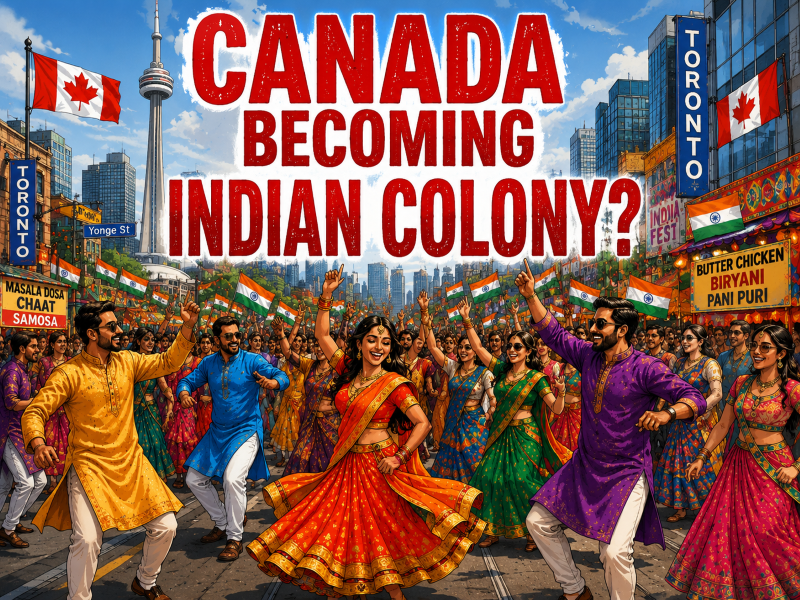
A viral video showing hundreds of people dancing at an Indian cultural event in Toronto has triggered an intense debate on immigration, multiculturalism and cultural integration in Western countries.
The footage, widely shared across social media platforms, shows large crowds participating in traditional Indian dances while enjoying music, food stalls and cultural performances at a public gathering in the Canadian city.
What began as a celebration of culture quickly turned into a flashpoint online after a social media user shared the clip with a controversial caption claiming that Canada had become an "Indian colony" and warning against similar demographic changes elsewhere.
Social media post fuels controversy
The post rapidly gained traction, drawing thousands of comments and reactions from users across different countries.
Many critics argued that immigrant communities should focus on integrating into local society rather than recreating cultural traditions from their countries of origin.
Canada has turned into an Indian colony!!!!
— Știrile Rezistenței 🇷🇴 🇷🇺 (@RomaniaMare1918) June 2, 2026
Canadians are now a minority in Toronto and the flood of immigrants is larger than ever before.
We cannot let this happen to us. Wake up!!!! pic.twitter.com/TIxnzuLeS7
Some commenters questioned the scale of such events and claimed they reflected broader concerns about immigration levels and demographic change.
The debate soon expanded beyond the festival itself, touching on wider issues of national identity, cultural preservation and immigration policy.
Strong pushback against criticism
The criticism also sparked a strong backlash from users who defended the Indian diaspora and multicultural celebrations.
Supporters argued that Canada has long been a nation shaped by immigrants from around the world and that cultural festivals are a common feature of diverse societies.
Many highlighted the economic contributions made by immigrant communities through taxes, entrepreneurship and participation in the workforce.
Others questioned why a peaceful cultural celebration should be viewed negatively, describing the criticism as unfair and rooted in prejudice against visible minority groups.
Festival becomes symbol of wider debate
The online clash reflects broader conversations taking place across several Western countries, where immigration has become an increasingly contentious political and social issue.
Rising living costs, housing shortages and economic pressures have contributed to concerns among some sections of the population, while advocates of multiculturalism argue that diversity remains a defining strength of countries such as Canada.
As a result, seemingly ordinary cultural events can become symbols in larger debates about identity, belonging and social cohesion.
Growing tensions over immigration
The viral Toronto video has underscored how social media can amplify existing anxieties surrounding immigration and demographic change.
While supporters viewed the gathering as a celebration of cultural heritage and community spirit, critics saw it as evidence of what they describe as insufficient integration.
The sharply divided reactions highlight the increasingly polarised nature of discussions around immigration in many parts of the world, with cultural events often becoming focal points for broader political and societal tensions.
Support Our Journalism
We cannot do without you.. your contribution supports unbiased journalism
IBNS is not driven by any ism- not wokeism, not racism, not skewed secularism, not hyper right-wing or left liberal ideals, nor by any hardline religious beliefs or hyper nationalism. We want to serve you good old objective news, as they are. We do not judge or preach. We let people decide for themselves. We only try to present factual and well-sourced news.
Support objective journalism for a small contribution.