 Child labour
Child labour figure rises to 160 million, as COVID puts many more at risk
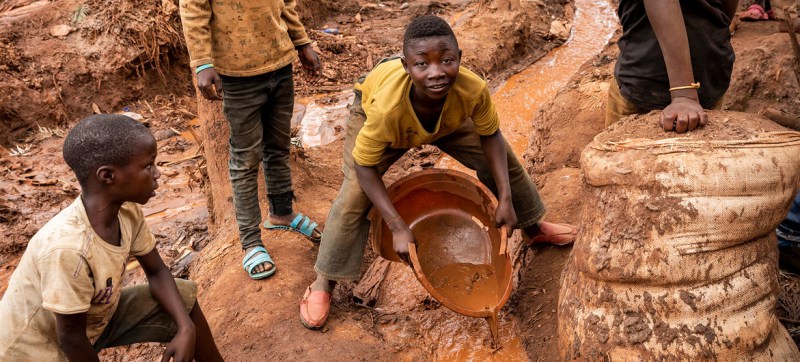
New York: For the first time in two decades, the number of children being put to work has risen – to 160 million worldwide, representing an increase of 8.4 million over four years – while millions of other are at risk due to the COVID-19 pandemic, according to a new UN report launched on Thursday.
The report, Child Labour: Global estimates 2020, trends and the road forward, published by the International Labour Organization (ILO) and UN Children’s Fund (UNICEF), urges governments and international development banks, said UNICEF Executive Director Henrietta Fore, “to prioritize investments in programmes that can get children out of the workforce and back into school”.
Tackle root causes
She also called for better social protection programmes “that can help families avoid making this choice in the first place”.
Released ahead of World Day Against Child Labour on 12th June, the report warns that progress to end child labour has stalled for the first time in 20 years, reversing the previous downward trend that saw the number put to work fall by 94 million between 2000 and 2016.
It points to a significant rise of children working between the ages of 5 and 11, which accounts for just over half of the total global figure.
And those between five and 17 in hazardous work, which is likely to harm their health, safety or moral well-being, has risen by 6.5 million since 2016, to 79 million.
“The new estimates are a wake-up call. We cannot stand by while a new generation of children is put at risk”, said ILO Director-General Guy Ryder.
COVID impact
In sub-Saharan Africa, population growth, recurrent crises, extreme poverty, and inadequate social protection measures have led to an additional 16.6 million children in child labour over the past four years, according to the report.
And COVID-19 is endangering progress made in Asia and the Pacific, and Latin America and the Caribbean regions.
The report warns that globally, nine million additional children are at risk of being pushed into child labour by the end of 2022 as a result of the pandemic, which could rise to 46 million without access to critical social protection coverage.
“Inclusive social protection allows families to keep their children in school even in the face of economic hardship. Increased investment in rural development and decent work in agriculture is essential”, Mr. Ryder explained.
Additional economic shocks and school closures caused by COVID-19 mean that children already obliged or forced to work, may be working longer hours or under worsening conditions, while job and income losses among vulnerable families may push many more into the worst forms of child labour.
Report findings
The agriculture sector accounts for 70 per cent of children in child labour, followed by 20 per cent in services and 10 per cent in industry.
Nearly 28 per cent of 5 to 11-year-olds and 35 per cent of those aged 12 to 14 in child labour, are out of school.
Child labour is more prevalent among boys than girls at every age but when 21 hours per week of household chores are taken into account, the gender gap in child labour narrows.
Child labour in rural areas stands at 14 per cent, nearly three times higher than the 5 per cent in urban areas.
“We are losing ground in the fight against child labour, and the last year has not made that fight any easier”, said UNICEF Executive Director Henrietta Fore.
“Now, well into a second year of global lockdowns, school closures, economic disruptions and shrinking national budgets, families are forced to make heart-breaking choices”, she added.
Reverse the trend
To reverse the upward trend, ILO and UNICEF are calling for adequate social protection, including universal child benefits; increased spending on quality education and getting all children back into school, including those forced out before COVID-19; and investment in child protection systems, rural public services and livelihoods.
As part of the International Year for the Elimination of Child Labour, the global partnership Alliance 8.7, of which UNICEF and ILO are partners, is encouraging Member States, regional and international organizations and others to redouble their efforts in the global fight against child labour by making concrete action pledges.
Beginning tomorrow, the ILO and UNICEF chiefs will join other prominent speakers and youth advocates at a high-level event at the International Labour Conference during a week of action, discussing the new global estimates and roadmap ahead.
“We are at a pivotal moment and much depends on how we respond. This is a time for renewed commitment and energy, to turn the corner and break the cycle of poverty and child labour”, said the ILO Director-General.
Support Our Journalism
We cannot do without you.. your contribution supports unbiased journalism
IBNS is not driven by any ism- not wokeism, not racism, not skewed secularism, not hyper right-wing or left liberal ideals, nor by any hardline religious beliefs or hyper nationalism. We want to serve you good old objective news, as they are. We do not judge or preach. We let people decide for themselves. We only try to present factual and well-sourced news.
Support objective journalism for a small contribution.