 Pakistan
Echoes of 1947 Partition: A haunting journey of memory and survival for Sikhs in Pakistan
In the heart of Punjab, in the quiet village of Wattu, resides Master Darshan Singh, an 85-year-old retired Sikh school teacher. His life is a testament to the indelible scars left by one of the most traumatic events of the 20th century—the Partition of India in 1947.
Born in Sekham village near Lahore, now in Pakistan, Darshan Singh’s memories paint a vivid, heartrending picture of the violent upheaval that tore apart families, communities, and a nation.
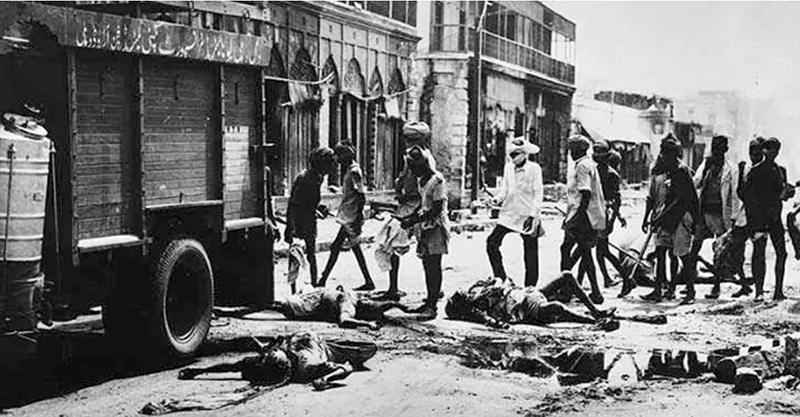
“I was part of a ‘jatha’ of over two lakh Sikhs and Hindus moving towards Amritsar,” Darshan Singh recalls with a heavy heart. “But in Jambher village, the Muslims attacked us.” The word ‘attack’ seems too mild to capture the brutality he witnessed. “The ‘jatha’ was accompanied by three ‘Gorkha’ army men on the orders of the outgoing British. They shot dead three looters who raided us, and the others fled.” His eyes reflect the pain of those days, a deep, unending anguish.
As the ‘kafla’ (large group) moved forward, they encountered scenes that still haunt him. “We came across a canal full of floating dead bodies of Sikhs and Hindus. The water had turned red with their blood.” This macabre image is etched into his memory, a symbol of the communal hatred that erupted with the creation of a religion-based country.
The loss was not just physical but deeply emotional. Darshan Singh’s paternal uncle, Hakam Singh, chose to stay behind in their ancestral village, Sekham, converting to Islam and adopting the name Hakam Ali. Despite the change in religion, the bond between their families remained. “Even our Gurus demolished the divisive walls of religions and propagated universal love,” he reflects, underscoring the enduring ties of brotherhood that transcended the violent divisions of Partition.
The journey from Sekham to Amritsar was fraught with peril. “The ‘kafla’ covered about 40 km to reach Amritsar in 10 days, changing routes frequently to avoid attacks by Muslim looters,” Darshan Singh recounts. He was just eight years old, yet the memories are as vivid as if they happened yesterday. Eventually, his family settled in Wattu, a village emptied of its Muslim residents who had fled to Pakistan. Here, Sikh migrants took over the vacated houses and agricultural lands, trying to rebuild their shattered lives.
In 1990, Darshan Singh visited his ancestral village in Pakistan as part of a ‘jatha’ that travels annually for Baisakhi celebrations. He met his ‘chacha’ Hakam Ali and saw the stark differences in their lives. “The farmers there were poverty-stricken, living in ‘kucha’ houses made of mud, with no tubewells or tractors in their fields. They wished to move to India’s Punjab, but I told them this is not possible anymore.”
The cultural ties, however, persist. “The converted Sikhs continue to shun eating beef as part of their traditions, even though Muslims relish it. They also avoid liquor, using opium and its derivatives instead.” These remnants of shared cultural heritage serve as a poignant reminder of a time when religious identities were less divisive.
Master Darshan Singh’s story is not just a personal recollection but a powerful reminder of the human cost of Partition. It speaks to the resilience of those who survived, the lasting pain of displacement, and the enduring hope for a future where humanity transcends religious divides. As we listen to his memories, we are called to remember and to ensure that such horrors are never repeated.
(Image and text courtesy: Khalsavox.com)
Support Our Journalism
We cannot do without you.. your contribution supports unbiased journalism
IBNS is not driven by any ism- not wokeism, not racism, not skewed secularism, not hyper right-wing or left liberal ideals, nor by any hardline religious beliefs or hyper nationalism. We want to serve you good old objective news, as they are. We do not judge or preach. We let people decide for themselves. We only try to present factual and well-sourced news.
Support objective journalism for a small contribution.