Electronic waste poses ‘growing risk’ to environment, human health, UN report warns
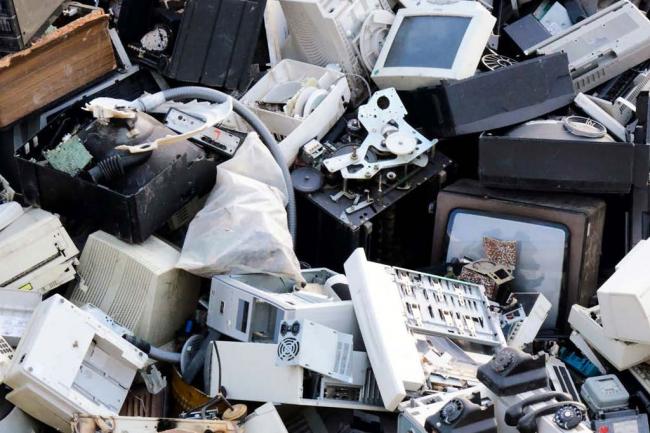
New York, Dec 14(Just Earth News): The growing volume of electronic waste, including discarded products with a battery or plug, such as mobile phones, laptops, televisions, refrigerators and electrical toys, poses a major threat to the environment and human health, the United Nations warned on Wednesday.
“Environmental protection is one of the three pillars of sustainable development […] E-waste management is an urgent issue in on Wednesday’s digitally dependent world, where use of electronic devices is ever increasing,” said Houlin Zhao, Secretary-General of the International Telecommunication Union (ITU).
The Global E-Waste Monitor 2017, released by ITU, the UN University (UNU) and the International Solid Waste Association (ISWA), highlights increasing levels of e-waste and its improper and unsafe treatment and disposal through burning or at dumpsites.
In 2016, 44.7 million metric tonnes of e-waste were generated, an increase of 3.3 million metric tonnes, or 8 per cent, from 2014. Experts foresee e-waste increasing a further 17 per cent to 52.2 million metric tonnes by 2021.
E-waste contains $55 billion worth of recoverable materials
In 2016, only about 20 per cent, or 8.9 million metric tonnes, of all e-waste was recycled.
“The Global E-waste Monitor serves as a valuable resource for governments developing their necessary management strategies, standards and policies to reduce the adverse health and environmental effects of e-waste,” said Zhao.
With 53.6 per cent of global households now having Internet access, national e-waste policies and legislation play an important role governing the actions of stakeholders who are associated with e-waste.
Currently 66 per cent of the world population, living in 67 countries, is covered by national e-waste management laws, a significant increase from 44 per cent in 2014.
Low recycling rates can have a negative economic impact. In 2016, it was estimated that e-waste contained rich deposits of gold, silver, copper, platinum, palladium and other high value recoverable materials, whose total value is estimated at $55 billion, a figure exceeding the gross domestic product of most countries in the world.
Source: ITU - The Global E-waste Monitor 2017
Source: www.justearthnews.com
Support Our Journalism
We cannot do without you.. your contribution supports unbiased journalism
IBNS is not driven by any ism- not wokeism, not racism, not skewed secularism, not hyper right-wing or left liberal ideals, nor by any hardline religious beliefs or hyper nationalism. We want to serve you good old objective news, as they are. We do not judge or preach. We let people decide for themselves. We only try to present factual and well-sourced news.
Support objective journalism for a small contribution.