First-ever World Braille Day underscores importance of written language for human rights
New York, Jan 4 (IBNS): To raise awareness of the importance of Braille for approximately 1.3 billion people living with some form of distance or near vision impairment, on Friday the United Nations is observing the first official World Braille Day.
Recognized henceforth each 4 January, the Day was proclaimed by the General Assembly last November, as a means of realizing fully the human rights of visually-impaired and partially-sighted people, and bringing written language to the forefront as a critical prerequisite for promoting fundamental freedoms.
The World Health Organization(WHO) reports that people who are visually impaired are more likely than those with full sight to experience higher rates of poverty and disadvantages which can amount to a lifetime of inequality.
Around the world, 39 million people are blind, and another 253 million have some sort of vision impairment. For them, Braille provides a tactical representation of alphabetic and numerical symbols so blind and partially-sighted people are able to read the same books and periodicals printed as are available in standard text form.
Six dots represent each letter, number, even musical and mathematical symbols, to allow the communication of important written information to ensure competency, independence and equality.
The UN Convention on the Rights of Persons with Disabilities (CPRD) cites Braille as a means of communication; and regards it as essential in education, freedom of expression and opinion, access to information and social inclusion for those who use it.
To foster more accessible and disability-inclusive societies, the UN launched its first-ever flagship report on disability and development last year, coinciding with the International Day for Persons with Disabilities on which Secretary General António Guterres urged the international community to take part in filling inclusion gaps.
“Let us reaffirm our commitment to work together for an inclusive and equitable world, where the rights of people with disabilities are fully realized,” he said.
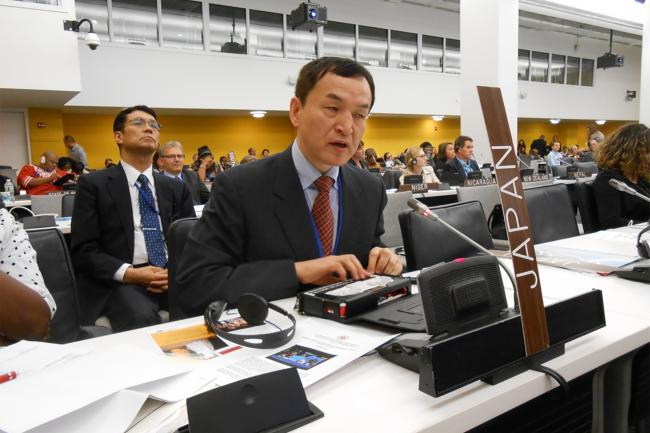
Image: UN website
Support Our Journalism
We cannot do without you.. your contribution supports unbiased journalism
IBNS is not driven by any ism- not wokeism, not racism, not skewed secularism, not hyper right-wing or left liberal ideals, nor by any hardline religious beliefs or hyper nationalism. We want to serve you good old objective news, as they are. We do not judge or preach. We let people decide for themselves. We only try to present factual and well-sourced news.
Support objective journalism for a small contribution.