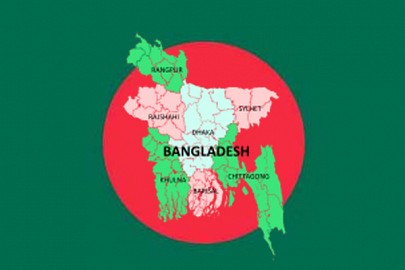
Freedom of expression came under severe attack in Bangladesh: Human Rights Watch
While extremist groups targeted secular bloggers and foreign aid workers, the government cracked down on media and civil society activists, launched contempt of court proceedings, or prosecuted them under vague and overbroad laws.
In the 659-page World Report 2016, its 26th edition, Human Rights Watch reviews human rights practices in more than 90 countries. In his introductory essay, Executive DirectorKenneth Roth writes that the spread of terrorist attacks beyond the Middle East and the huge flows of refugees spawned by repression and conflict led many governments to curtail rights in misguided efforts to protect their security.
At the same time, authoritarian governments throughout the world, fearful of peaceful dissent that is often magnified by social media, embarked on the most intense crackdown on independent groups in recent times.
Several commuters were killed or injured during violence that erupted during some Bangladeshi opposition blockades of transport routes.
The government, led by Prime Minister Sheikh Hasina, became increasingly authoritarian, with security forces arresting key opposition leaders, often on trumped up charges, and state authorities refusing to prosecute security forces for serious violations, including torture, killings, and enforced disappearances.
“There is no effective political opposition in parliament because the main parties chose not to participate, but now the Sheikh Hasina government seems determined to stem all dissenting voices – even outside the parliament,” said Brad Adams, Asia director. “It is terrible that when bloggers were murdered, the government could only preach self-censorship.”
In 2015, five bloggers with atheist sympathies were hacked to death by extremist groups. Other bloggers, writers, and publishers, whose names were published on a hit-list, went into hiding, concerned that government protection was either absent or at best inadequate. A Shia procession and a Hindu temple faced serious attacks, with many wounded.
Members of the opposition Jamaat-e-Islami and Bangladesh Nationalist Party (BNP) said they feared arbitrary arrest or extrajudicial killings. In a case emblematic of the seriousness of the crackdown on opposition, BNP spokesman Salahuddin Ahmed was abducted in Dhaka on March 10, 2015.
In May, Ahmed was found in India and charged by Indian authorities with illegal entry. Witnesses reported that Ahmed was detained by security forces in Dhaka, but the government failed to investigate their role in this and other alleged disappearances of opposition members.
Civil society and media faced harsh conditions. Forty-nine people were prosecuted for expressing public support for another journalist’s right to publish fair criticism of war crimes trials. Media critical of the government continued to face closure, as editors and journalists faced charges and arrest. Two men were prosecuted for social media posts criticizing the government. Following final death sentences for two men found guilty of war crimes in 1971, the government shuttered several social media applications, including Facebook.
“Many of the problems we highlighted last year remain in place this year, and in some cases are much worse,” said Adams. “It has been a long time since the fundamental rights of expression, assembly, and religion have been recognized and protected in Bangladesh.”
In a positive development, efforts to shore up support for labor rights in the country’s garment industry seemed to be having an impact, with a rise in the number of labor unions registered, although concerns remain about the capacity of workers to form and participate freely in labour unions.
Support Our Journalism
We cannot do without you.. your contribution supports unbiased journalism
IBNS is not driven by any ism- not wokeism, not racism, not skewed secularism, not hyper right-wing or left liberal ideals, nor by any hardline religious beliefs or hyper nationalism. We want to serve you good old objective news, as they are. We do not judge or preach. We let people decide for themselves. We only try to present factual and well-sourced news.
Support objective journalism for a small contribution.