 Iran War
‘Gate of Tears’ in focus? Bab al-Mandeb Strait emerges as Iran’s next pressure point after Hormuz
Iran has warned that it could target the Bab al-Mandeb Strait, a crucial global shipping corridor, if the United States and Israel escalate the ongoing conflict through a ground invasion of Iranian territory.
The warning includes the possibility of action around key locations such as Kharg Island, a major hub for Iran’s crude exports.
Officials indicated that any military action on Iranian soil or its strategic assets could prompt Tehran to open additional fronts, extending the conflict beyond its current scope.
Strategic choke point under growing focus
The Bab al-Mandeb Strait, located at the southern end of the Red Sea between Yemen and the Gulf of Aden, connects vital maritime routes used for global trade and energy transport.
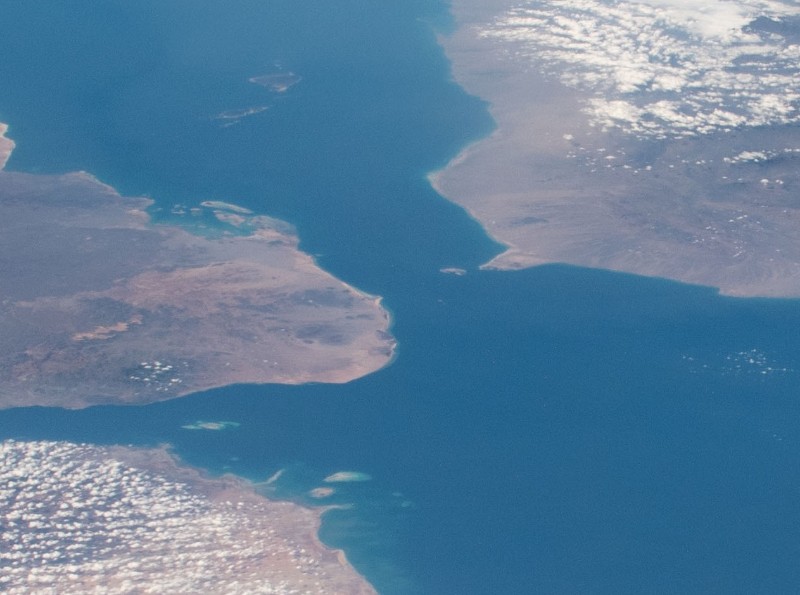 Bab-el-Mandeb Strait, taken from outer space during ISS Expedition 62, February 23, 2020. Photo: Wikimedia Commons/NASA
Its Arabic name translates to “Gate of Tears”, reflecting its historical and strategic significance.
Any disruption in this corridor could have widespread economic consequences, particularly as global markets are already experiencing volatility due to tensions in the region.
The strait handles a significant portion of international shipping, making it one of the world’s most critical maritime passageways.
Strait of Hormuz remains flashpoint
The Strait of Hormuz continues to remain a central point of tension, with Iran exerting influence over the passage that carries nearly 20 percent of the world’s oil supply.
Reports of delays and disruptions in this waterway have already contributed to rising global oil prices.
Analysts have highlighted that any additional disruption, particularly at another chokepoint, could intensify pressure on international energy markets and further impact global trade flows.
BREAKING:
— Visegrád 24 (@visegrad24) March 27, 2026
A new video of the burning Maltese-flagged and Egyptian-owned container ship SAFEEN PRESTIGE that was attacked in the Strait of Hormuz on March 4th by the Islamic regime in Iran and has since reignited several times.
It was abandoned by its crew after the initial… pic.twitter.com/2XDpE5aPrj
Role of regional allies and expanding conflict
Reports from Iranian media outlets suggest that allied groups, including forces based in Yemen, could play a role in extending operations towards the Bab al-Mandeb region.
These groups have previously targeted vessels in the Red Sea, raising concerns about a broader geographical spread of hostilities.
The potential involvement of such actors could expand the conflict beyond the Persian Gulf, increasing risks for commercial shipping routes across multiple regions.
Rising tensions across key maritime routes
The warning comes amid weeks of intensified conflict involving the United States, Israel and Iran, following reported strikes on Iranian military sites.
The situation has already affected shipping activity in both the Gulf and the Red Sea, prompting concerns among global stakeholders over the security of major sea lanes.
Support Our Journalism
We cannot do without you.. your contribution supports unbiased journalism
IBNS is not driven by any ism- not wokeism, not racism, not skewed secularism, not hyper right-wing or left liberal ideals, nor by any hardline religious beliefs or hyper nationalism. We want to serve you good old objective news, as they are. We do not judge or preach. We let people decide for themselves. We only try to present factual and well-sourced news.
Support objective journalism for a small contribution.