 Global Economy
Global trade expected to slow, after record high of $28.5 trillion in 2021
New York: Global trade reached a record high in 2021, but it is expected to slow this year for many reasons including continuing delays in global supply chains, UN economists said on Thursday.
Announcing that worldwide commerce amounted to around $28.5 trillion last year, the UN Conference on Trade and Development (UNCTAD) explained that this represented an increase of almost 13 per cent compared to the pre-pandemic level of 2019.
“The positive trend for international trade in 2021 was largely the result of increases in commodity prices, subsiding pandemic restrictions and a strong recovery in demand due to economic stimulus packages,” UNCTAD said, in its Global Trade Update 2022.
Quarter measures
Significantly, the UN body pointed to data showing that trade in services finally returned to its pre-pandemic levels in the fourth quarter (Q4) of 2021, while trade in goods remained strong, increasing by almost $200 billion, to about $5.8 trillion, a new record.
UNCTAD – which offers technical advice to developing countries to access the globalized economy – also noted that poorer nations’ exports outpaced their richer counterparts in the last quarter of 2021, compared with Q4 2020 (by 30 per cent versus 15 per cent).
South-South trade growth was also above the worldwide average in the last quarter of 2021, with an increase of about 32 per cent on Q4 2020, and with an increase of about 38 per cent when excluding east Asian economies.
Regionally, trade growth in the last quarter of 2021 remained very strong across all geographic regions, UNCTAD said, although it was lower in Europe, North America and east Asia. Commodity-exporting regions fared better, as commodity prices increased.
Yearly outlook
Turning to this year’s outlook and the reasons why it is set to see less growth than in 2021, the UN body said that last year’s economic drivers were likely to “abate”.
This means that “trade growth will continue to slow during Q1 2022” and then “normalize during 2022”, UNCTAD said, before pointing to “persistent inflation” in the US and “concerns” over China’s real estate sector.
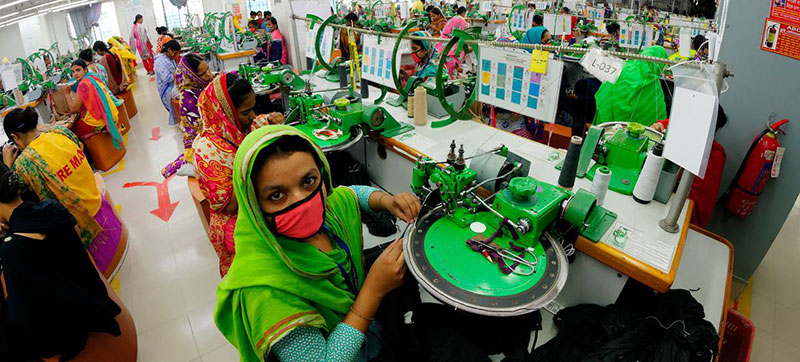
Global supply chains – one of the key elements of the worldwide trade puzzle - will also continue to face negative pressures created by the COVID-19 pandemic, UNCTAD continued.
This is despite efforts by shipping companies to improve reliability and risk management, amid semiconductor shortages and rising energy prices that have contributed to supply shortages and “spiralling” maritime transport costs.
Spoiler alerts
Global trade patterns could also be affected by a new trade agreement among east Asian and Pacific region economies - the Regional Comprehensive Economic Partnership (RCEP).
It entered into force on 1 January this year, and it could significantly increase trade between members, “diverting trade from non-member countries”, UNCTAD said, adding that other regional commerce initiatives such as the African Continental Free Trade Area could produce a similar result.
Increasing demand for commodities that can support greener energy alternatives – such as cobalt, lithium, and rare earth metals – is also likely to be reflected in global trade this year, UNCTAD added, while highly indebted governments may have to make hard trade choices if rising interest rates force them to pay more to ship goods from A to B.
Support Our Journalism
We cannot do without you.. your contribution supports unbiased journalism
IBNS is not driven by any ism- not wokeism, not racism, not skewed secularism, not hyper right-wing or left liberal ideals, nor by any hardline religious beliefs or hyper nationalism. We want to serve you good old objective news, as they are. We do not judge or preach. We let people decide for themselves. We only try to present factual and well-sourced news.
Support objective journalism for a small contribution.