 Slavery
Governments urged to protect poor against modern slavery, step up development financing
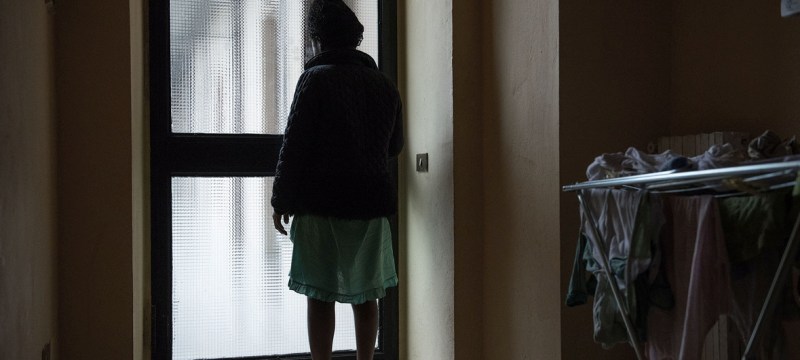
NewYork: Unless governments act now, millions of the world’s most vulnerable people could be pushed into contemporary forms of slavery and other exploitation due to the COVID-19 pandemic, a UN independent human rights expert has said.
The warning comes from UN Special Rapporteur on contemporary forms of slavery, Tomoya Obokata, who presented his first report to a virtual session of the UN Human Rights Council on Wednesday.
“Historical levels of underemployment or unemployment, loss of livelihoods and uncertain economic perspectives are some of the complex consequences of the COVID-19 pandemic which have hit the most vulnerable hardest”, he told members.
“Combined with weak safety nets and a dismantling of labour rights and social protection regulations in some countries, there is an acute risk that the poorest will be pushed into bonded labour, forced labour or other contemporary forms of slavery for survival.”
No ‘quick fix’
Mr. Obokata said although States may view the dismantling of labour rights as a “quick fix” for the increasing pressure on business brought on by the ensuing global economic recession, this will come at a “high price”.
He particularly called for accountability for businesses that exploit vulnerable workers producing, processing and providing medicine, medical equipment or Personal Protective Equipment (PPE) during the pandemic.
“Labour rights must be upheld and social protection ensured across all economic sectors,” he stressed. “States must ensure that in the context of the COVID-19 pandemic, no one is left behind and pushed into slavery-like practices.”
Listen to local communities
Relatedly, governments are being called to spend more on development, both at home and abroad, and to listen to communities most in need.
The appeal was made by the UN independent human rights expert on the right to development, Saad Alfarargi, who also presented his annual report to the Geneva-based Human Rights Council.
“To maximize the impact of limited resources available for development, states and development finance institutions must put communities and individuals at the centre of their decision-making”, he said.
Mr. Alfarargi pointed out that development finance was already lagging prior to the pandemic, which has added an additional strain, particularly on the budgets of developing countries.
He urged authorities to increase assistance to developing countries, to institute progressive tax systems as means to bridge resource gaps, and to include communities in decision-making that affects them.
“People who benefit from development have voices – and we need to listen, to ensure that we target limited resources where they will matter most,” he said.
Mr. Alfarargi said communities across the globe report that they are not being involved as decision makers from the start of discussions surrounding which development projects to finance. On the contrary, he added, development banks, governments and companies often propose projects without their input.
He called on decision-makers to create and budget for inclusive consultation processes in line with the central promise of the UN’s sustainable development agenda to leave no one behind.
About UN Special Rapporteurs
Special Rapporteurs and other independent experts fall under what is known as the Special Procedures of the UN Human Rights Council.
They are mandated by the Council to monitor specific country human rights situations or thematic issues in all parts of the world.
They are neither UN staff, nor are they paid by the Organization.
Support Our Journalism
We cannot do without you.. your contribution supports unbiased journalism
IBNS is not driven by any ism- not wokeism, not racism, not skewed secularism, not hyper right-wing or left liberal ideals, nor by any hardline religious beliefs or hyper nationalism. We want to serve you good old objective news, as they are. We do not judge or preach. We let people decide for themselves. We only try to present factual and well-sourced news.
Support objective journalism for a small contribution.