In Johannesburg, UN youth envoy spotlights need to boost support for reproductive health
New York, Feb 15 (IBNS): In this century, child marriage cannot be allowed to happen, and similarly, children should not give birth to children, the United Nations youth envoy told an African forum on reproductive health and rights on Wednesday.
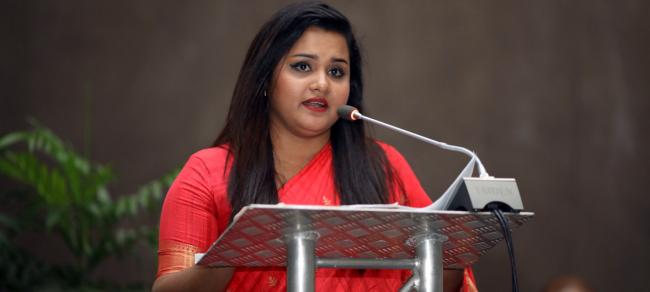
“There are high levels of adolescent pregnancy virtually everywhere in the continent. Africa has the highest levels of teenage pregnancy in the world. The larger part of them occur within marriage,” said Jayathma Wickramanayake, the UN Secretary General’s Special Envoy on Youth, at the opening ceremony of the eighth Africa Conference on Sexual and Reproductive Health and Rights held in Johannesburg, South Africa.
She said that the 2030 Agenda for Sustainable Development, adopted by all UN Member States two-and-a-half years ago, acknowledges that increased attention to the health and well-being of the world’s adolescent girls, including their sexual and reproductive health, is a necessary condition for success.
“A cross-sectoral approach is critical to ensure the holistic development of young women, as well as young men, as we know that negative sexual and reproductive health outcomes impact on so many other issues in a young person’s life,” she stressed.
Wickramanayake noted that the millions of adolescent girls drop out of school due to child marriage and teenage pregnancy, and millions more still miss out on their education during their menstrual cycle because of the lack of sanitation facilities at their schools.
The lack of employment opportunities impacts those who become mothers while being children themselves, or those who are found to be HIV positive.
With the world today faced with the largest generation of youth in its history, these 1.8 billion people between the ages of 10 to 24 are the torchbearers of the Sustainable Development Goals (SDGs). Meaningful youth engagement and participation is critical to the achievement of the 2030 Agenda.
“Nowhere is this more critical than right here in the African continent, the only region that will continue to see its youth populations grow in the decades to come,” she said.
Africa continues to be faced with high levels of maternal mortality and morbidity. It is unacceptable that women continue to die while giving life. AIDS is still among the leading causes of death among adolescents in Sub-Saharan Africa.
All of this requires concerted efforts to ensure young people everywhere have access to quality, affordable and accessible sexual and reproductive health services.
She said during her multi-country visit across the continent, which took her to Senegal, the Gambia, Ghana, Nigeria, and South Africa, she witnessed the youthful energy that is driving creativity and new solutions to old problems, through technology and innovation.
It is young people who will drive the development of this region over the next several decades, and investing in young people is the recipe to the realization and achievement of the SDGs and other national and regional development frameworks, in particular the African Union 2063 Agenda.
“It is high time to recognize the power of the young people, and the value they can bring on to the decision-making table as full-fledged partners,” Wickramanayake said.
Lindsay Barnes/UNFPA
Support Our Journalism
We cannot do without you.. your contribution supports unbiased journalism
IBNS is not driven by any ism- not wokeism, not racism, not skewed secularism, not hyper right-wing or left liberal ideals, nor by any hardline religious beliefs or hyper nationalism. We want to serve you good old objective news, as they are. We do not judge or preach. We let people decide for themselves. We only try to present factual and well-sourced news.
Support objective journalism for a small contribution.