In the face of growing insecurity, Afghanistan still needs support, Security Council told
“Since my last briefing, there has been progress in meeting Afghanistan’s challenges in three distinct but interrelated areas: economic, security and political,” Mr. Haysomreported, stressing that failure in any one of these areas would have consequences for the overall success of the Afghan transition.
Just, this morning, the UN Assistance Mission in Afghanistan (UNAMA), which Mr. Haysom heads condemned an attack in which a large car bomb, which detonated outside the Afghan Parliament buildings in Kabul, allowed gunmen to enter the compound.
As parliament members were meeting to vote on a new Afghan defense minister, a gunfight with police killed at least eight attackers and left a number of civilians injured. The Taliban claimed responsibility for the attack.
In a statement issued by his spokesperson, UN Secretary-General Ban Ki-moon strongly condemned the assault on parliament “as yet another unacceptable attack on civilians in Afghanistan.”
In addition, just two days ago, 16 civilians, mostly women and children, were killed when a bus hit an improvised explosive device.
“Tragic though this is, sadly it was not an isolated incident, rather a typical event,” the Special Representative acknowledged, noting that intensification of the conflict was as predicted. There has been higher attrition on both sides, but the most tragic index of this intensification, he explained, is the toll on civilians – so far this year 4,216 civilians have been killed or injured.
“While the Government has repeatedly stated its readiness to engage in direct talks with the Taliban, what is still missing is a clear indication from the Taliban that they are ready to engage directly with the Government.”
It is thus critical, he underscored, that the international community as a whole, and the regional neighbors in particular, send the same message to all involved, unambiguously and forcefully: “the time to begin direct peace and reconciliation talks is now.”
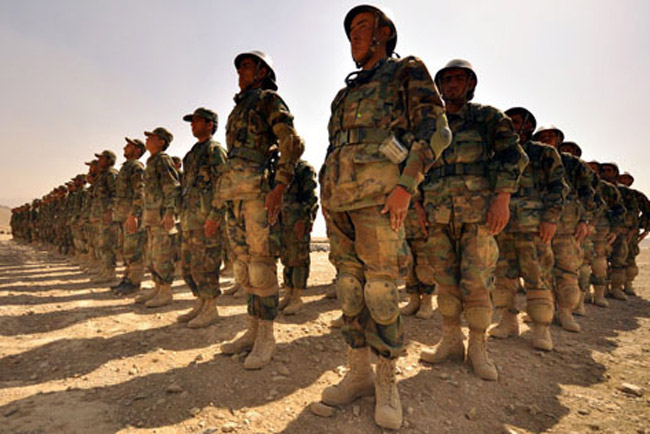
The Afghan National Security Forces (ANSF) have been undeniably stretched as they take on full security responsibilities, the UNAMA chief noted. While they face operational challenges, their commitment is beyond question and they are demonstrating resilience in the face of insurgent efforts to take and hold ground, he assured.
Foreign fighters from Afghanistan’s northern neighbors and elsewhere present a particular challenge. There also remains considerable concern that Islamic State in Iraq and the Levant (ISIL), is seeking to establish a foothold, he underlined.
“This demands greater regional involvement and collaboration to address this shared threat. It seems inequitable that Afghanistan should be shouldering the burden of taking on terrorists whose point of origin and eventual destinations are its neighbors.”
The economic contraction that followed the withdrawal of international military forces also presents a continuing challenge to the Government to meet the fiscal gap; “the gap between the resources it can muster and the monies it must spend”, the UN official continued.
“At this time of continued low economic growth, we must also guard against the danger of an increasing shift into the illicit economy, particularly so in the case of burgeoning narcotics production,” he added.
On the political front, Mr. Haysom also reported modest progress, notably the appointment of 21 provincial governors, with an agreement secured on other significant appointments.
But the lack of clarity on the future of the current Wolesi Jirga [the lower house of the National Assembly] had caused “consternation”, he said, with the potential for “public discord”. Thankfully, the UNAMA chief highlighted, just three days ago, the Afghan President Ashraf Ghani decreed an extension of the Wolesi Jirga until elections can be held.
Photo: UNAMA
Support Our Journalism
We cannot do without you.. your contribution supports unbiased journalism
IBNS is not driven by any ism- not wokeism, not racism, not skewed secularism, not hyper right-wing or left liberal ideals, nor by any hardline religious beliefs or hyper nationalism. We want to serve you good old objective news, as they are. We do not judge or preach. We let people decide for themselves. We only try to present factual and well-sourced news.
Support objective journalism for a small contribution.