 Iran
Iran
IRGC tightens grip on power as leadership vacuum deepens in Iran
As the Iran conflict intensifies, a significant internal power shift appears to be unfolding within the country’s leadership structure.
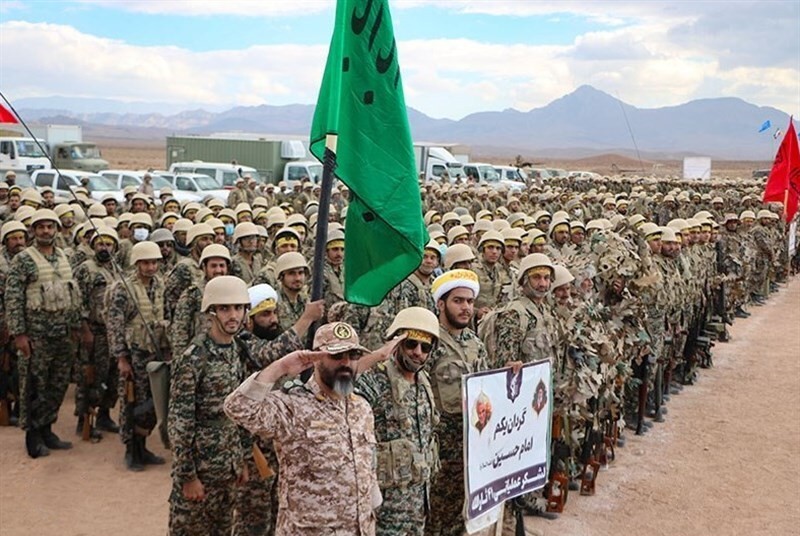
Reports indicate that the Islamic Revolutionary Guard Corps (IRGC) has assumed effective control over key state functions, raising questions about the balance of authority in Tehran during a critical phase of the war.
The developments come as uncertainty surrounds the status of Iran’s top leadership following the initial wave of US and Israeli strikes that reshaped the country’s command structure.
Leadership vacuum after Khamenei’s death
The conflict’s opening phase resulted in the death of Supreme Leader Ali Khamenei, creating a leadership vacuum at the highest level.
His son, Mojtaba Khamenei, was subsequently named as his successor.
However, Mojtaba has not appeared publicly since his appointment.
Official communications attributed to him have been delivered through televised statements rather than direct appearances, prompting speculation regarding his condition.
Reports have suggested that the Supreme Leader may be incapacitated, with conflicting claims emerging from US officials and other sources regarding his health.
IRGC expands control over state machinery
In the absence of a visible central authority, the IRGC has reportedly moved to consolidate its influence.
According to accounts cited by Iran International, a council of senior IRGC commanders is now overseeing daily decision-making processes.
The organisation, which operates independently of Iran’s conventional military, is also said to have established tight security around Mojtaba Khamenei, limiting access to him and controlling the flow of information.
Government channels appear to have limited direct engagement with the Supreme Leader, with reports indicating that even official briefings are not consistently reaching him.
President faces political deadlock
Iranian President Masoud Pezeshkian is reported to be facing significant constraints in exercising authority.
Efforts to engage with the Supreme Leader have not yielded results, contributing to what has been described as a political impasse.
Tensions between the presidency and the IRGC have become more visible in recent weeks, particularly over strategic decisions related to the conflict and regional military operations.
Control over key appointments
The IRGC has also asserted influence over critical government appointments.
A recent attempt by the president to nominate Hossein Dehghan as intelligence minister did not proceed, reportedly following intervention from IRGC leadership.
The current IRGC commander, Ahmad Vahidi, is said to have advocated for direct control over sensitive positions during the conflict, marking a departure from established procedures where such appointments required approval from the Supreme Leader.
This shift underscores the expanding role of the IRGC in shaping both military and administrative decisions.
Growing rift within Iran’s leadership
Differences between the civilian leadership and the IRGC have become increasingly pronounced.
Reports indicate that President Pezeshkian has expressed concerns over the continuation of strikes targeting neighbouring Gulf countries, citing potential economic repercussions.
Iran’s economy has faced mounting pressure amid the prolonged conflict, with disruptions affecting key sectors and resources.
At the same time, internal tensions have reportedly emerged within the Supreme Leader’s circle, including discussions over changes to senior security personnel.
IRGC’s longstanding influence and strategic role
The IRGC has historically played a central role in Iran’s political and economic landscape.
Established after the 1979 revolution, the organisation has expanded its influence across sectors such as energy, banking, infrastructure and defence.
In the current context, the IRGC also maintains control over the Strait of Hormuz, a vital global energy corridor that has been effectively restricted during the conflict.
According to experts, with the leadership structure in flux and wartime pressures continuing, the IRGC’s position as the dominant authority within Iran appears to have strengthened further.
Support Our Journalism
We cannot do without you.. your contribution supports unbiased journalism
IBNS is not driven by any ism- not wokeism, not racism, not skewed secularism, not hyper right-wing or left liberal ideals, nor by any hardline religious beliefs or hyper nationalism. We want to serve you good old objective news, as they are. We do not judge or preach. We let people decide for themselves. We only try to present factual and well-sourced news.
Support objective journalism for a small contribution.