 Kakhovka dam
Kakhovka dam disaster a health crisis in the making: WHO
Disease outbreaks, a mental health crisis and lack of access to care are among the devastating health impacts of the destruction of the Kahkovka dam in southern Ukraine a week ago, the UN World Health Organization (WHO) said on Tuesday.
WHO’s representative in Ukraine Dr. Jarno Habicht told reporters that after the collapse of the dam caused severe flooding and massive displacement, the agency’s primary concern was the potential outbreak of waterborne diseases such as cholera and typhoid, as well as rodent-borne diseases.
The agency’s teams were monitoring the situation on the ground and were ready to scale up support, he said.
Water and food security fears
Dr. Habicht noted that back in the spring, WHO had provided cholera kits to people in the Kherson region and neighbouring areas “as a preventive measure”. Water safety messages were being shared in collaboration with the Ukrainian Ministry of Health on social media, along with information materials on how to avoid getting sick from contaminated water.
But the situation was evolving fast, Dr. Habicht said, and hundreds of thousands were in need of drinking water.
He also pointed out that WHO and partners in the field were monitoring the long terms impact of the release of hazardous chemicals into the water. Food security was another major concern in the flooded settlements.
As of Monday, the UN and partners had delivered water, hygiene items and food to nearly 180,000 people in the affected areas, according to the UN aid coordination office (OCHA).
Dr. Habicht also informed of ongoing discussions with the authorities on pipelines to support neighbouring cities like Kryvyi Rih and Mykolaiv, which are experiencing water shortages.
‘Emergency within the emergency’
The WHO representative described the mental health toll of the devastation on the population as “significant”, explaining that the Dnipro River was very frequented by locals in the summer and that the humanitarian disaster in the area “ruptured people’s memories”.
The situation has compounded the population’s distress following months of attacks on civilian infrastructure and a “dark and cold winter” amid power cuts, Dr. Habicht said.
Overall, there were more than 10 million people in the country with mental health needs. “It is an emergency within the emergency,” he stressed.
Access to care
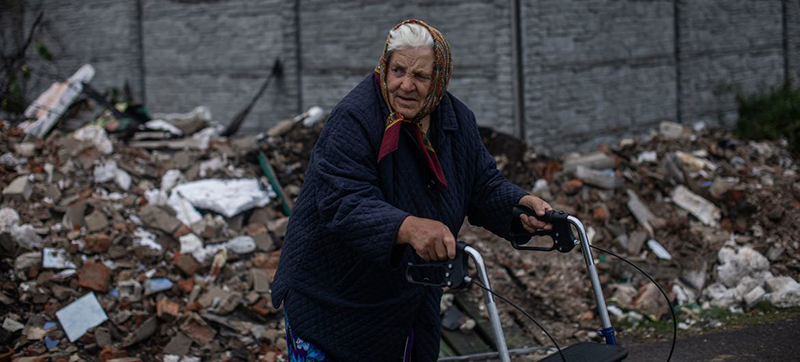
Dr. Habicht also flagged the lack of care for non-communicable diseases, with many health facilities flooded and water and electricity supply issues impacting the cold chain. He said that the water damage had similar effects on health facilities as last October’s Russian strikes on the country’s energy infrastructure. Many elderly people in the area were at particular risk due to the lack of care.
Tweet URL
Medical supplies, including pneumonia kits and pediatric kits, were part of the humanitarian convoys to Kherson last week and this week, Dr. Habicht said. WHO and partners were also assessing needs related to the restoration of health facilities.
Working as one
Describing the organization of operations on the ground, Dr. Habicht underscored that the whole UN was working together under the leadership of Resident and Humanitarian Coordinator Denise Brown, and that every day a coordination meeting was held on how to best support hundreds of thousands of desperate civilians together with the Government of Ukraine and partners.
He also recalled that there was still no humanitarian access to the parts of the affected areas occupied by Russia, and that security guarantees needed “to go there and save lives” were currently being discussed.
Attack on Kryvyi Rih
Meanwhile, a Russian missile attack on the city of Kryvyi Rih in Ukraine’s Dnipropetrovsk region hit a residential building on Tuesday according to media reports, killing at least 11 civilians.
The central Ukrainian city is the home town of President Volodymyr Zelenskyy.
Denise Brown condemned the attack, saying that “Russia’s invasion has, once again, claimed lives and brought suffering to the people of Ukraine”, and insisting that civilians and civilian infrastructure should never be a target, in line with international humanitarian law.
The city has also been impacted by the Kakhovka dam destruction as water supply to residents has been severely limited.
Support Our Journalism
We cannot do without you.. your contribution supports unbiased journalism
IBNS is not driven by any ism- not wokeism, not racism, not skewed secularism, not hyper right-wing or left liberal ideals, nor by any hardline religious beliefs or hyper nationalism. We want to serve you good old objective news, as they are. We do not judge or preach. We let people decide for themselves. We only try to present factual and well-sourced news.
Support objective journalism for a small contribution.