Malaysian law criminalizing dissent threatens free expression-UN experts
The Act, which carries sentences of up to five years in jail, outlaws a number of vague offenses, such as expressing “any seditious words” or acting with “seditious tendency” to incite hatred or disaffection of the government or the judiciary, promoting hostility between different races or classes, or questioning any right, privilege, sovereignty prerogative stated in the country’s Constitution, the experts said in a press release.
“The Sedition Act is reportedly used in a way that prevents Malaysians from expressing and debating, freely and openly, a diverse range of political opinions and ideas,” they continued.
“It is time for Malaysia to adjust its legislation, including the 1948 Sedition Act, to be in line with international human rights standards, and take firm steps towards the effective enjoyment of the right to freedom of expression.”
The group of experts included David Kaye, the Special Rapporteur on the rights to freedom of peaceful assembly and of association; Maina Kiai, the Special Rapporteur on the independence of judges and lawyers; Gabriela Knaul, the Special Rapporteur on the situation of human rights defenders; and Michel Forst, the Special Rapporteur on the situation of human rights defenders.
According to the UN Human Rights Council, there have been at least 23 recent reported cases of persons charged with sedition – including elected members of Parliament, politicians, human rights defenders, academics, lawyers, students and journalists – for publishing or disseminating information and ideas through the Internet or traditional media.
On that note, the Act itself has been addressed by UN human rights experts on several previous occasions, with the first Special Rapporteur on freedom of opinion and expression, Abid Hussain, noting that it could suppress expression and curb peaceful assembly.
Independent experts are appointed by the Geneva-based Council to examine and report back on a country situation or a specific human rights theme. The positions are honorary and the experts are not UN staff, nor are they paid for their work.
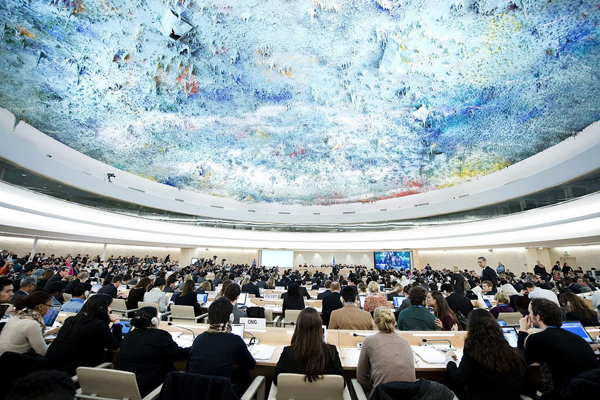
A general view of the Human Rights Council in session. Photo: Jean-Marc Ferré
Support Our Journalism
We cannot do without you.. your contribution supports unbiased journalism
IBNS is not driven by any ism- not wokeism, not racism, not skewed secularism, not hyper right-wing or left liberal ideals, nor by any hardline religious beliefs or hyper nationalism. We want to serve you good old objective news, as they are. We do not judge or preach. We let people decide for themselves. We only try to present factual and well-sourced news.
Support objective journalism for a small contribution.