Mali: UN food relief agency warns funding gap may jeopardize school meals programme
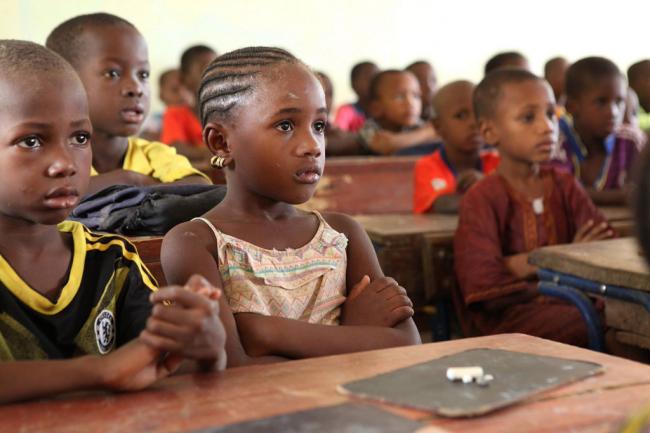
“This is critical. School meals are often the only nutritious meal a child receives a day, relieving families from further financial stress, motivating parents to send their children to school, and, ultimately, serving as a vehicle for education,” said Silvia Caruso, WFP Mali Country Director.
“Teachers tell us that if the meals are no longer provided, there is a significant risk that parents will stop sending their children to school; children find it difficult to walk long distances to school or stay in class for a full day on an empty stomach,” she added.
Since 2010, Mali has faced successive food security crises, brought on by irregular rainfall and prolonged insecurity in the north of the country. More than a quarter of the population suffers from moderate and severe food insecurity, according to WFP.
The agency noted that despite the high levels of insecurity – particularly in northern and central Mali – since 2012, it has been able to provide, along with its partners, school meals to an average of 170,000 children per year.
WFP also highlighted that school meals were instrumental in the 2015 back-to-school campaign of the Government of Mali, encouraging families to let their children resume their studies in regions such as Gao, Mopti and Timbuktu, which had been bearing the brunt of the conflict, and where schools were closed between 2012 and 2015.
“We urge our supporters not to forget the children of Mali. They have been through a lot these past years. Going to school helps them regain their childhood, and school meals play an important role in keeping them in school,” Caruso said.
WFP said it works closely with the Ministry of Education in Mali to implement the school meals programme. The Government of Mali approved a national school feeding programme in 2009.
According to a 2014 national survey, the average prevalence of global acute malnutrition in Malian children under five years old stands at 13 per cent. The World Health Organization (WHO) rates a global acute malnutrition prevalence between 10 and 14 per cent as serious, and above 15 per cent as a critical emergency.
Photo: WFP West Africa
Source: www.justearthnews.com
Support Our Journalism
We cannot do without you.. your contribution supports unbiased journalism
IBNS is not driven by any ism- not wokeism, not racism, not skewed secularism, not hyper right-wing or left liberal ideals, nor by any hardline religious beliefs or hyper nationalism. We want to serve you good old objective news, as they are. We do not judge or preach. We let people decide for themselves. We only try to present factual and well-sourced news.
Support objective journalism for a small contribution.