Marginalization, perceived abuse of power pushing Africa’s youth to extremism – UN study
“This study sounds the alarm that as a region, Africa’s vulnerability to violent extremism is deepening,” Abdoulaye Mar Dieye, UNDP Africa Director, said on Thursday at the launch of the report in New York.
“Borderlands and peripheral areas remain isolated and under-served. Institutional capacity in critical areas is struggling to keep pace with demand. More than half the population lives below the poverty line, including many chronically underemployed youth.”
Exploring the factors that shape the dynamics of the recruitment process, prompting some individuals to gravitate toward extremism, where the vast majority of others do not, the study Journey to Extremism in Africa: Drivers, Incentives and the Tipping Point for Recruitment, also finds that many who joined faced marginalization and neglect over the course of their lives, starting in childhood.
With few economic prospects or outlets for meaningful civic participation that can bring about change, and little trust in the state to either provide services or respect human rights, the study suggests that such an individual could – upon witnessing or experiencing perceived abuse of power by the state – be tipped over the edge into extremism.
Government action the ‘tipping point’
In one of the study’s most striking findings, 71 per cent of recruits interviewed said that it was some form of government action that was the ‘tipping point’ that triggered their final decision to join an extremist group.
The actions cited most often were killing or arrest of a family member or friend.
Against this backdrop, the study urges governments to reassess militarized responses to extremism in the light of respect for the rule of law and human rights commitments. It also highlights the importance of focusing on development in addressing security challenges.
“Delivering services, strengthening institutions, creating pathways to economic empowerment – these are development issues,” Dieye added.
Another key recommendation calls for local-level interventions, such as supporting community-led initiatives building social cohesion, as well as amplifying the voices of local religious leaders who advocate tolerance.
However, it cautions that these initiatives must be spearheaded by trusted local actors.
Key findings
Based on responses to questions including on family circumstances, childhood and education, religious ideologies, economic factors, state and citizenship, the study also finds that:
Majority of recruits come from borderlands or peripheral areas that have suffered longstanding marginalization and report having had less parental involvement growing up.
Most recruits expressed frustration at their economic conditions – with employment the most acute need at the time of joining – as well as a deep sense of grievance towards government: 83 per cent believe that government looks after only the interests of a few, and over three-fourths said they have no trust in politicians or in the state security apparatus.
Recruitment in Africa occurs mostly at the local, person-to-person level, rather than online, as is the case in other regions – a factor that may alter the forms and patterns of recruitment as connectivity improves.
Some 80 per cent of recruits interviewed joined within a year of introduction to the violent extremist group – and nearly half of these joined within just one month.
In terms of exiting a violent extremist group, most interviewees who surrendered or sought amnesty did so after losing confidence in the ideology, leadership or actions of their group.
The report is based on a two-year, in-depth study, including interviews with some 495 voluntary recruits who joined Africa’s most prominent extremist groups, including Boko Haram and Al-Shabaab.
According to UNDP estimates, some 33,300 people in Africa have lost their lives to violent extremist attacks between 2011 and early 2016.
Violence perpetrated by the Boko Haram terrorist group alone has resulted in the deaths of at least 17,000 people and displaced millions in the Lake Chad region.
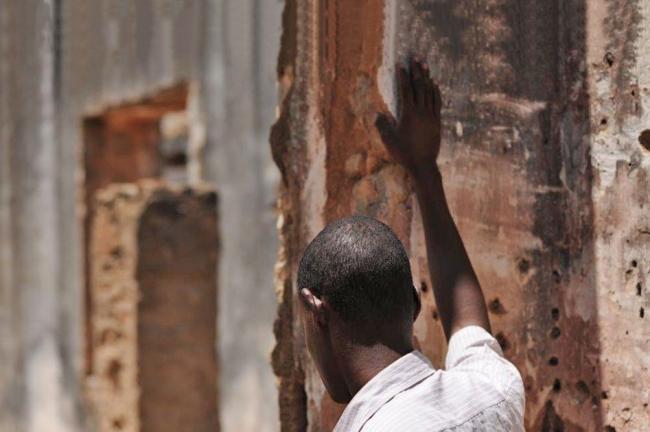
Photo: Guy Oliver/IRIN
Source: www.justearthnews.com
Support Our Journalism
We cannot do without you.. your contribution supports unbiased journalism
IBNS is not driven by any ism- not wokeism, not racism, not skewed secularism, not hyper right-wing or left liberal ideals, nor by any hardline religious beliefs or hyper nationalism. We want to serve you good old objective news, as they are. We do not judge or preach. We let people decide for themselves. We only try to present factual and well-sourced news.
Support objective journalism for a small contribution.