Measures to control yellow fever still needed despite drop in number of cases – UN health agency
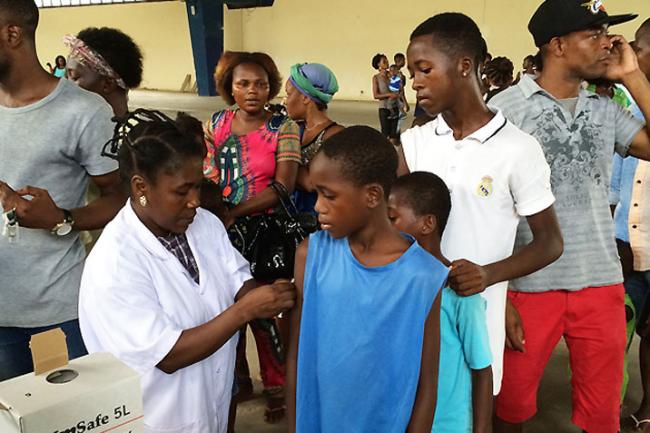
The UN World Health Organization expects that more than 17 million additional people will be vaccinated in Angola and Democratic Republic of the Congo before the rainy season starts in September.
“As both [countries] are endemic for yellow fever, sporadic cases simultaneously occurred [during the outbreak] in remote, rural areas, adding to the existing logistical challenges,” said WHO in a statement issued over the weekend.
“This includes ensuring that people in hard-to-reach areas have access to vaccination as well as creating infrastructure to keep vaccines at the right temperature until they are administered,” it added.
According to the agency, as the outbreaks in the two countries occurred in dense, urban settings, they posed special challenges for the respective governments and responding partners and agencies, including WHO.
Yellow fever is an acute viral haemorrhagic disease transmitted by infected Aedes mosquitoes. Its symptoms of include fever, headache, jaundice, muscle pain, nausea, vomiting and fatigue. A small proportion of patients who contract the virus develop severe symptoms and approximately half of those die within seven to 10 days.
According to a WHO factsheet, vaccination is the most important means of preventing the disease. In high-risk areas where vaccination coverage is low, prompt recognition and control of outbreaks using mass immunization is critical for preventing epidemics. It is important to vaccinate most (80 per cent or more) of the population at risk to prevent transmission in a region with a yellow fever outbreak.
In the statement issued last week, WHO added that because the transmission in 2016 has been “explosive,” it has rapidly exhausted the usual global emergency stockpile of six million vaccine doses managed by the International Coordinating Group (ICG) on Vaccine Provision, a mechanism comprising WHO, UN Children’s Fund (UNICEF), Médecins sans Frontières, and the International Federation of the Red Cross and Red Crescent Societies that coordinates the provision of emergency vaccine supplies to countries during major outbreaks.
Benefits of effective coordination and collaboration
Owing to a collaboration of partners, including Gavi, ICG and manufacturers countries affected by the current outbreak were able to access almost 19 million doses of the yellow fever vaccine since January – 3 times the volume normally planned for outbreak use in a 12 month period.
The coordination also ensured that a response to the outbreak has been timely, with the first shipment of vaccines to Angola arriving within five days of the country making a request to the ICG.
Use of the global supplies of yellow fever vaccine has been carefully monitored and reviewed. Even with the upcoming campaigns in Angola and Democratic Republic of the Congo there are an estimated five million doses of the vaccine left in the emergency stockpile, an amount which will increase progressively as more vaccine is produced.
The agency speculates that the rise in yellow fever cases is due to the unusual severity of El Niño, which has led to a higher than usual density of the mosquitoes that transmit the disease.
Photo: WHO
Source: www.justearthnews.com
Support Our Journalism
We cannot do without you.. your contribution supports unbiased journalism
IBNS is not driven by any ism- not wokeism, not racism, not skewed secularism, not hyper right-wing or left liberal ideals, nor by any hardline religious beliefs or hyper nationalism. We want to serve you good old objective news, as they are. We do not judge or preach. We let people decide for themselves. We only try to present factual and well-sourced news.
Support objective journalism for a small contribution.