Millions of children out of school in Middle East and North Africa: UNICEF report
“A region which – until just a few short years ago – had the goal of universal education well within reach, today faces a disastrous situation,” says the report, Education Under Fire, which focuses on the impact of violence on schoolchildren and education systems in nine countries that have been directly or indirectly impacted by violence.
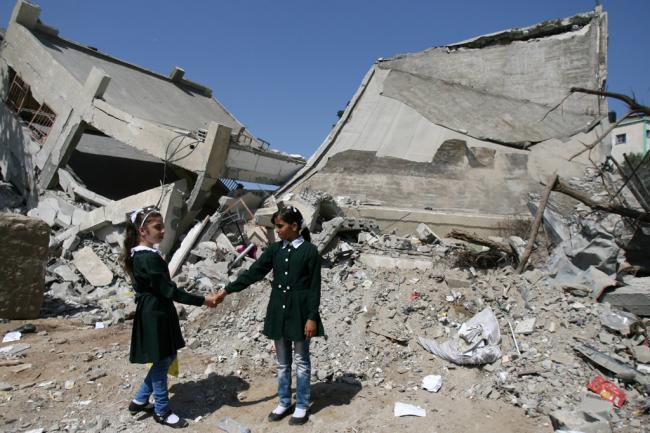
The UNICEF report says attacks on schools and education infrastructure – sometimes deliberate – are one key reason why many children do not attend classes.
“In Syria, Iraq, Yemen and Libya alone, nearly 9,000 schools are out of use because they have been damaged, destroyed, are being used to shelter displaced civilians or have been taken over by parties to the conflict,” it says.
Other factors, according to the agency, include the fear that drives thousands of teachers to abandon their posts, or keeps parents from sending their children to school because of what might happen to them along the way – or at school itself.
“The destructive impact of conflict is being felt by children right across the region,” said Peter Salama, Regional Director for UNICEF in the Middle East and North Africa.
He said, “It’s not just the physical damage being done to schools, but the despair felt by a generation of schoolchildren who see their hopes and futures shattered.”
In Jordan, Lebanon and Turkey, more than 700,000 Syrian refugee children are unable to attend school because the overburdened national education infrastructure cannot cope with the extra student load.
“Like children anywhere, they want an opportunity to learn, and acquire the skills they need to fulfil their potential,” the report said.
It said, “This constitutes a clear challenge to the international community, host governments, policy makers, and all those who want to see the Middle East and North Africa emerge from its current turmoil.”
The report highlights a range of initiatives – including the use of self-learning and expanded learning spaces – that help children learn even in the most desperate of circumstances.
But it says that the funding such work receives is not commensurate with the burgeoning needs, despite the fact that children and parents caught up in conflict overwhelmingly identify education as their number one priority.
In particular, the No Lost Generation Initiative, launched by UNICEF and other partners in 2013 to galvanize more international backing for the education and protection needs of children affected by the Syria crisis deserves more support, the report says.
The report calls on the international community, host governments, policy makers, the private sector and other partners to: reduce the number of children out of school through the expansion of informal education services especially for vulnerable children; provide more support to national education systems in conflict-hit countries and host communities to expand learning spaces, recruit and train teachers and provide learning materials; and in countries affected by the Syria crisis, advocate for the recognition and certification of non-formal Education services.
Photo: UNICEF/Eyad El Baba
Support Our Journalism
We cannot do without you.. your contribution supports unbiased journalism
IBNS is not driven by any ism- not wokeism, not racism, not skewed secularism, not hyper right-wing or left liberal ideals, nor by any hardline religious beliefs or hyper nationalism. We want to serve you good old objective news, as they are. We do not judge or preach. We let people decide for themselves. We only try to present factual and well-sourced news.
Support objective journalism for a small contribution.