More Governments now online but greater effort needed to boost e-services: UN
“E-government holds tremendous potential to improve the way that governments deliver public services and enhance broad stakeholder involvement in public service,” said Wu Hongbo, UN Under-Secretary-General for Economic and Social Affairs.
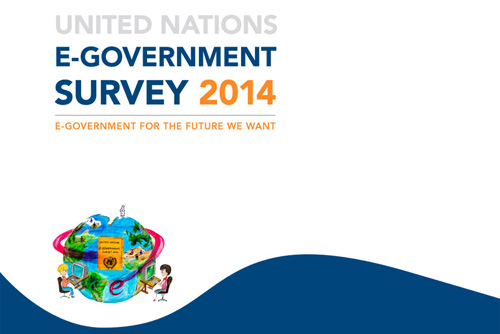
His office today released the latest ‘UN E-Government Survey’ which scores Governments every two years on their overall electronic efforts, as well as progress in online public service delivery, e-participation, use of social media, and open government data, among others.
This year’s survey found that e-government is “entering a new episode” with all 193 UN Member countries using national websites for the first time, and with Government officials using their online presence to add public value to people’s lives in an inclusive manner.
Governments’ use of social media rose 50 per cent between 2012 and 2014, with 118 countries using some form of social media, including Twitter.
The report also notes wide disparities among regions and countries in e-government with more developed countries continue to outpace developing neighbours. The level of a country’s economic, social and political development was one of the main factors contributing to e-government development, which is also influenced by investment in telecommunication, human capital and provision of online services.
The Republic of Korea ranked first in global e-government due to its continued leadership and focus on e-government innovation, followed by Australia and Singapore, which recently established robust telecommunications infrastructure, invested in developing their human resources, expanded usage of e-government facilities and extended service delivery.
At the regional level, Europe continued to lead followed by the Americas, Asia, Oceania and Africa. France topped the list in Europe, and ranked fourth globally. The United States led countries in the Americas, and ranked seventh overall. Tunisia was the top performer in Africa, and ranked 75th worldwide, according to the report’s E-Government Development Index.
To improve e-government, the Survey suggests countries establish a clear national vision, supported by committed leadership, appropriate policies and collaborative governance frameworks, and greater investment in telecommunication infrastructure, human capital and provision of online services.
United Nations e-government survey 2014. Credit: UN DPI.
Support Our Journalism
We cannot do without you.. your contribution supports unbiased journalism
IBNS is not driven by any ism- not wokeism, not racism, not skewed secularism, not hyper right-wing or left liberal ideals, nor by any hardline religious beliefs or hyper nationalism. We want to serve you good old objective news, as they are. We do not judge or preach. We let people decide for themselves. We only try to present factual and well-sourced news.
Support objective journalism for a small contribution.