Nepal: UN underscores need to act before monsoon rains risk further disaster
“The monsoon is just four weeks away, and will bring with it a high possibility of increased landslides, making it extremely difficult – if not impossible – to bring timely relief aid and recovery support to communities in rural areas,” said Magdy Martínez-Solimán, Director of the UN Development Programme (UNDP) Bureau for Policy and Programme Support.
“These areas are in dire need,” he stressed, noting that 85 to 90 per cent of houses have been destroyed or are unsafe.
The second earthquake of a magnitude of 7.3 on the Richter scale that struck Nepal on 12 May has worsened the living conditions of the survivors of the first quake that struck on 25 April, particularly in the severely-affected districts.
Some humanitarian agencies like the UN World Food Programme (WFP) say they are turning to a team of elite mountain climbers is help reach earthquake survivors in some of Nepal’s toughest mountain terrain, where helicopters and trucks cannot go.
“As part of WFP’s Operation Mountain Express, the mountaineers abandoned plans to climb one of the Himalaya peaks and instead have undertaken a relief mission by using their skills and training to help get food and other supplies to people in need,” according to WFP.
Meanwhile, the UN Children’s Fund (UNICEF) said “the psychological impact of these two major earthquakes in less than three weeks cannot be underestimated, with increasing needs for psychosocial interventions and safe spaces for children to be together, feel supported and receive psychosocial support.”
“Road travel is threatened by landslides and unstable buildings,” UNICEF said, adding that “this threat has an emotional impact on field staff while also challenging relief operations.”
The World Health Organization, in its latest update, reported some 8,500 deaths from the quakes. In addition, more than 25 hospitals and over 900 smaller facilities, predominantly village health posts which supply basic medicines and other routine services in remote communities outside the Kathmandu valley, were completely or partly damaged.
WHO also warned that the security of health workers remains an issue in the remote villages where landslides have been reported.
With the annual monsoon season a month away, Nepalese communities in remote areas are now facing a new challenge – isolation from desperately-needed aid and assistance to restore and rebuild their homes and livelihoods.
Martínez-Solimán, who saw first-hand the levels of destruction caused by the earthquakes in a country that was fragile and vulnerable even before the disaster, likened the fallen houses and heaps of rubble to a war zone.
The coming monsoon risked a secondary disaster for the many Nepalese living in remote, inaccessible communities in this rugged, mountainous country, he said.
Martínez-Solimán’s visit, involving meetings with the Nepalese Government, international development partners and affected communities, is part of UNDP’s push to hash out a robust recovery plan for the country that protects and restores infrastructure, services and livelihoods, even as immediate efforts to meet people’s most basic needs continue.
As the lead UN agency on disaster recovery, UNDP works in crisis situations to minimize the longer-term impacts on affected communities, whether caused by natural disasters or manmade conflict.
“The onset of the monsoon has sounded an alarm,” he said. “We must act now.”
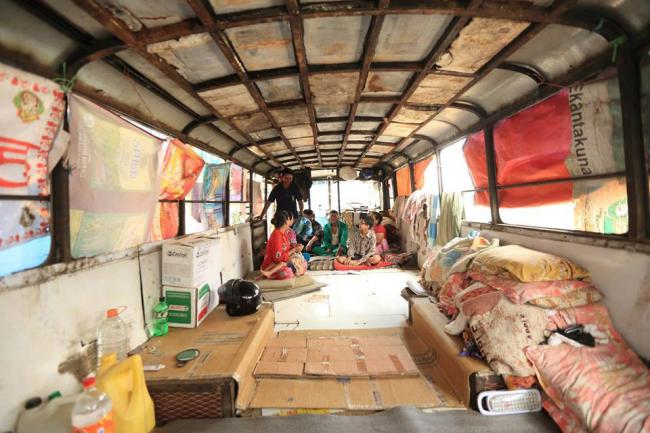
Photo: UNDP Nepal/Laxmi Prasad Ngakhusi
Support Our Journalism
We cannot do without you.. your contribution supports unbiased journalism
IBNS is not driven by any ism- not wokeism, not racism, not skewed secularism, not hyper right-wing or left liberal ideals, nor by any hardline religious beliefs or hyper nationalism. We want to serve you good old objective news, as they are. We do not judge or preach. We let people decide for themselves. We only try to present factual and well-sourced news.
Support objective journalism for a small contribution.