 Hafiz Saeed
Pakistan Army Official echoes LeT founder Hafiz Saeed in fresh threat to India on Indus waters
Pakistan’s top military spokesperson, Lt Gen Ahmed Sharif Chaudhry, has issued a provocative threat to India that mirrors the inflammatory language used by Lashkar-e-Taiba (LeT) founder and designated terrorist Hafiz Saeed.
His remarks came amid growing tensions over India’s suspension of key provisions of the Indus Waters Treaty, following a deadly terror attack in Jammu and Kashmir’s Pahalgam.
'Will Choke Your Breath'
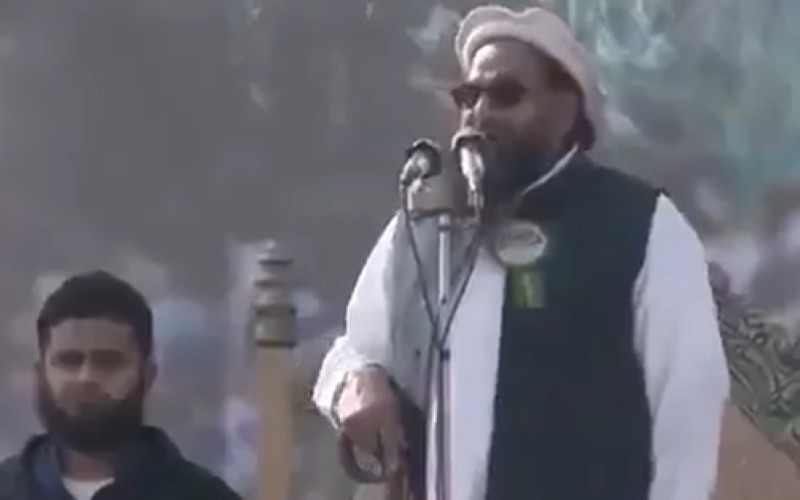
Speaking at a university event in Pakistan, Chaudhry warned, “If you block our water, we will choke your breath”—a phrase identical to one used by Hafiz Saeed in a widely circulated video on the social media platform X.
Saeed, the mastermind of the 2008 Mumbai attacks, is known for his hate-filled speeches against India and the West.
India partially suspended the Indus Waters Treaty on April 23, just one day after 26 people were killed in the Pahalgam terror attack.
Indus Waters Treaty
Signed in 1960 with World Bank mediation, the treaty governs water-sharing between India and Pakistan and requires regular data exchange.
New Delhi’s move marked a shift in policy, signalling that it will no longer separate dialogue from acts of terror.
India has consistently reiterated its position: “Blood and water cannot flow together; talk and terror cannot go together.”
The suspension of the treaty was part of a broader set of countermeasures, including the recently launched 'Operation Sindoor', which struck deep into Pakistan’s terror infrastructure.
Operation Sindoor: A Message Of Resolve
On May 7, India carried out Operation Sindoor, a strategic military operation that disabled 11 Pakistani airbases and struck nine terror hideouts across Pakistan and Pakistan-occupied Kashmir (PoK).
Many of the targeted airbases suffered such severe damage that their runways are expected to remain unusable until at least June.
Satellite imagery has confirmed the extent of destruction, and international defence analysts have praised the precision of the strikes, calling it a display of “mature aggression.”
Prime Minister Narendra Modi, speaking on the operation, said it represents “a new form of justice,” adding that the move was not about revenge, but a demonstration of India’s strength and intent. “India will not remain silent in the face of terror,” he declared.
Denial And Deflection In Islamabad
Despite the setbacks, Pakistan’s leadership has once again defaulted to denial and chest-thumping rhetoric.
Historically, Pakistan has a pattern of downplaying or even celebrating its military and strategic defeats. Instead of introspection, it often resorts to aggressive posturing to distract from internal weaknesses.
However, this time, Operation Sindoor has left Pakistan’s military and political elite visibly shaken.
The operation not only dismantled key parts of Pakistan’s terror and military infrastructure but also shattered the illusion of strategic superiority long touted by its generals.
India’s decisive action and diplomatic firmness suggest a new paradigm in its approach to cross-border terrorism—one that ties peace directly to accountability.
Support Our Journalism
We cannot do without you.. your contribution supports unbiased journalism
IBNS is not driven by any ism- not wokeism, not racism, not skewed secularism, not hyper right-wing or left liberal ideals, nor by any hardline religious beliefs or hyper nationalism. We want to serve you good old objective news, as they are. We do not judge or preach. We let people decide for themselves. We only try to present factual and well-sourced news.
Support objective journalism for a small contribution.