 Poila Boisakh
Poila Boisakh: Why Bangladesh just renamed its most celebrated Bengali New Year procession?
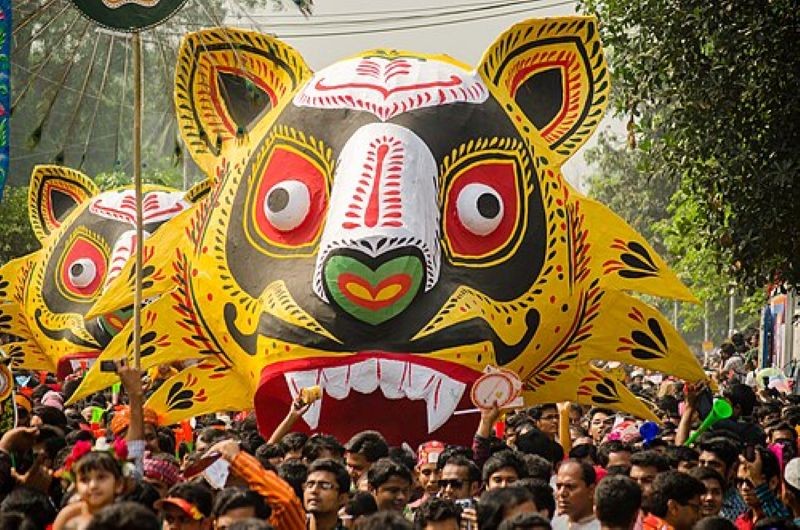
Bangladesh has renamed the Poila Boishakh (Bengali New Year) procession—recognised by UNESCO—as Boishakhi Shobhajatra, Culture Affairs Minister Nitai Roy Chowdhury announced on Sunday.
The decision was taken following a meeting at the Secretariat to review preparations for the annual procession, which is scheduled to take place in a week.
Chowdhury said the move aims to end a long-standing controversy surrounding the name of the procession, held every year to welcome the Bengali New Year.
“There has been a controversy over the name of the procession, and we want to bring an end to this debate,” he was quoted as saying by the Dhaka Tribune.
He added that the event would be conducted with due dignity, reflecting the cultural diversity of the country. Participants are expected to join the procession with traditional musical instruments, attire, and artistic expressions to create a festive atmosphere.
Explaining the rationale behind the new name, the minister said the government intends to emphasise “Boishakh” across all celebrations, including fairs, processions, and cultural programmes.
Background of the procession
According to UNESCO, the Mangal Shobhajatra is a traditional procession organised by students and teachers of the Faculty of Fine Arts at University of Dhaka. It is open to the public and marks the celebration of Pahela Baishakh (New Year’s Day) on April 14.
The tradition began in 1989, when students—amid the constraints of military rule—organised the procession to inspire hope and unity within the community.
Initially called Ananda Shobhajatra, the event was later renamed Mangal Shobhajatra by a former Awami League government. Following the fall of that regime, an interim administration briefly reverted the name to Ananda Shobhajatra.
Addressing concerns over whether the latest name change would impact UNESCO recognition, the minister clarified that the global body recognises the broader cultural heritage of the Boishakh festival in Bangladesh, not merely the procession’s title.
Support Our Journalism
We cannot do without you.. your contribution supports unbiased journalism
IBNS is not driven by any ism- not wokeism, not racism, not skewed secularism, not hyper right-wing or left liberal ideals, nor by any hardline religious beliefs or hyper nationalism. We want to serve you good old objective news, as they are. We do not judge or preach. We let people decide for themselves. We only try to present factual and well-sourced news.
Support objective journalism for a small contribution.