 Russia
Putin unleashes ‘Satan 2’: Russia tests ICBM with 35,000 km range
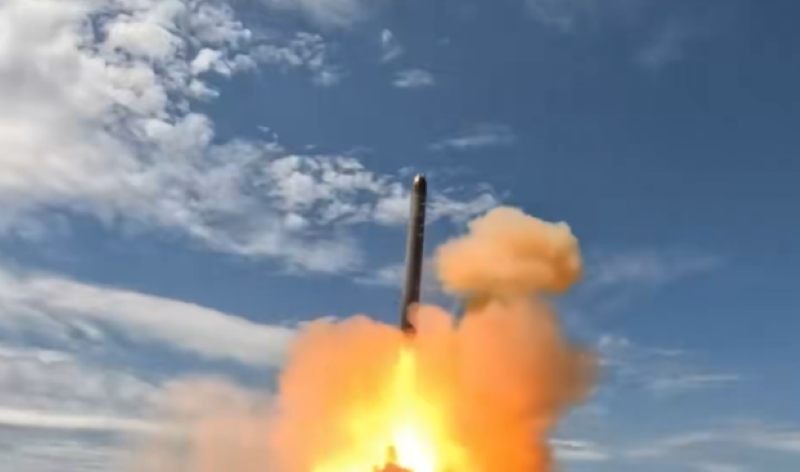
Russia has successfully test-fired the Sarmat intercontinental ballistic missile (ICBM), a nuclear-capable system described by the nation as the most powerful missile systems in the world.
According to the Kremlin’s official website, President Vladimir Putin hailed the launch as a significant milestone, stating that the Sarmat is “the most powerful missile system in the world,” comparable to the Soviet-era Voevoda missile currently in Russia’s arsenal.
He further claimed that the Sarmat’s total warhead yield is more than four times greater than that of any existing Western counterpart. Western analysts have nicknamed the system “Satan 2.”
The test comes months after the expiration of the last major arms control framework between the United States and Russia that had previously limited deployed nuclear arsenals.
🇷🇺 On May 12, President #Putin received a report on the successful test of the Sarmat missile.
— MFA Russia 🇷🇺 (@mfa_russia) May 12, 2026
💬 With 35,000+ km range, enhanced accuracy & the ability to overcome all existing & future missile defence systems, Sarmat is a formidable deterrence asset.https://t.co/waBvSOHm7I pic.twitter.com/rBchrCce1r
Putin also highlighted the missile’s advanced capabilities, saying it can follow both ballistic and suborbital flight paths, with a range exceeding 35,000 kilometres. He added that this enables improved accuracy and enhances its ability to bypass current and future missile defence systems. Russia plans to place the Sarmat on combat duty by the end of the year.
What is the Sarmat missile?
The RS-28 Sarmat is a silo-based, intercontinental ballistic missile designed to replace the Soviet-era Voevoda system. It is being developed as part of Russia’s next-generation strategic nuclear forces.
Officials say the system offers major improvements over its predecessor, including greater range, higher payload capacity (throw-weight), faster launch readiness, and enhanced countermeasures designed to penetrate advanced missile defence systems.
Strategic context
The New START treaty between the United States and Russia—which placed verifiable limits on deployed strategic nuclear weapons—has now expired, raising concerns about a renewed arms race and reduced nuclear transparency.
Expert view
Military expert and air defence historian Yuri Knutov, speaking to Sputnik, said the missile’s key feature is its ability to carry multiple independently targetable reentry vehicles (MIRVs), allowing each warhead to strike separate targets independently.
He also argued that even advanced missile defence systems, including the proposed U.S. “Golden Dome” shield, could struggle to intercept warheads that use suborbital trajectories and hypersonic manoeuvring capabilities.
Support Our Journalism
We cannot do without you.. your contribution supports unbiased journalism
IBNS is not driven by any ism- not wokeism, not racism, not skewed secularism, not hyper right-wing or left liberal ideals, nor by any hardline religious beliefs or hyper nationalism. We want to serve you good old objective news, as they are. We do not judge or preach. We let people decide for themselves. We only try to present factual and well-sourced news.
Support objective journalism for a small contribution.