Road accidents in Africa among deadliest worldwide, UN official says, urging more action
“There is projected increase in urbanization, motorization, infrastructure development projects and vehicle ownership in the region over the coming decades. Road traffic fatalities and injuries will continue to take a rising toll on countries if no significant changes are made,” warned the Special Envoy for Road Safety, Jean Todt, addressing the 2017 Africa Road Safety Conference in Cape Town, South Africa.
To change this trend, Todt urged participating governments to implement the Global Plan for the Decade of Action and the African Road Safety Action Plan, which focuses on safer roads, vehicles and road users. It also details improved post-crash care and stronger road safety governance, including the enforcement of strong legislation.
He also called for implementing basic laws not obeyed in some countries, such as using seat belts and helmets, child safety seats, and prohibiting drunk drivers.
“As much as strong legislation is important, a national vision and leadership are essential to lasting improvements in road safety,” he said, also citing opportunities to place road safety higher on global and national agendas.
The third area which could lead to reduced road traffic fatalities is to place more resources in collecting data, which can then lead to the development of strategies, monitor needs and assess impact.
“At the very basic level – within how many days after a crash can a death be classified as a road traffic fatality? Can we as a global community come to an agreement on data issues like these,” Todt said.
He added that reliable data is also urgently needed to achieve the Decade of Action for Road Safety, which runs through 2019, and the Sustainable Development Goals, which include a target calling for road fatalities and injuries to be halved by 2020, and another target related to safe and affordable access to sustainable transport systems for all by 2030.
“The continent suffers from the highest road traffic fatality rate than any other region – despite having less than five per cent of the world’s registered vehicles,” Todt said, noting the particular importance that improving road safety has in changing the lives of Africans.
He noted that 90 per cent of people and goods on the African continent are moved by road, adding that road crashes “can strip a country from realizing their true development potential.”
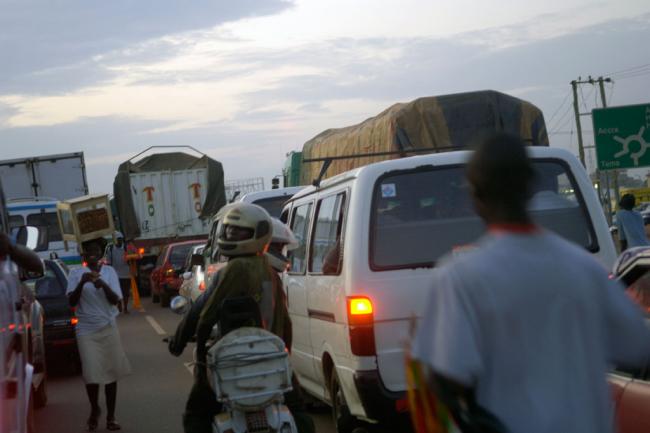
Photo: Jonathan Ernst/World Bank
Source: www.justearthnews.com
Support Our Journalism
We cannot do without you.. your contribution supports unbiased journalism
IBNS is not driven by any ism- not wokeism, not racism, not skewed secularism, not hyper right-wing or left liberal ideals, nor by any hardline religious beliefs or hyper nationalism. We want to serve you good old objective news, as they are. We do not judge or preach. We let people decide for themselves. We only try to present factual and well-sourced news.
Support objective journalism for a small contribution.