 Rohingya
Rohingya refugees share concerns with UN rights commissioner during visit to Cox’s Bazar
New York: During her first official visit to Bangladesh, the UN High Commissioner for Human Rights, Michelle Bachelet, met with a host of officials, civil society representatives and Rohingya refugees on Tuesday.
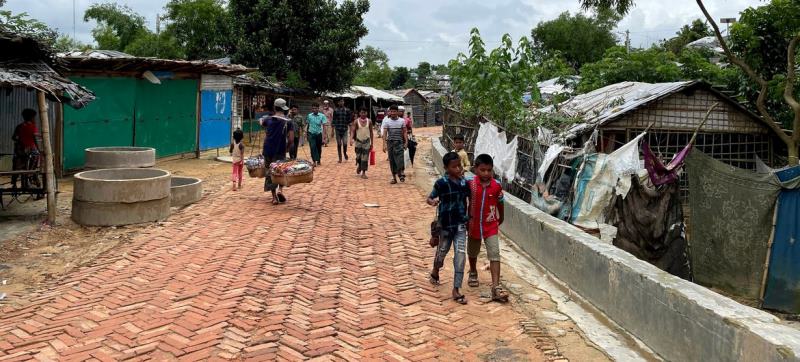
In Cox’s Bazar, she visited camps housing Rohingya refugees who, after terrible repression and human rights violations, fled Myanmar five years ago “to get some safety,” she said.
“An estimated 1.1 million Rohingyas are in Bangladesh right now, meaning Cox's Bazar, some of them in Bhashan char,” Ms. Bachelet said after visiting several sites inside a camp.
They described their grievances, their pains, how they left and lost everything they have – UN High Commissioner for Human Rights
Women share pains
The top UN human rights official met with religious leaders as well as women and youth groups who shared with her their concerns and hopes.
In a women’s safe place inside the Cox’s Bazar camp, she spoke with them about their experiences.
“They described their grievances, their pains, how they left and lost everything they have…their livelihoods” and loved ones, said Ms. Bachelet.
They talked about the shelter provided to them in Bangladesh’s Cox's Bazar camp as well as how the UN with partners and NGOs have been supporting them with services.
Youth wishing to return
Young volunteers, aged 15 to 18, spoke of their wishes for education and to return to Myanmar, with identities as citizens.
“When our rights are respected, we can have our livelihoods again, and we can have a land, and we can feel that we are part of the country,” she recounted their conversations.
Dignified repatriation
The High Commissioner reiterated the importance of continuing to ensure that safe and sustainable conditions exist for any returns and that they be conducted in a voluntary and dignified way.
“The UN is doing the best we can to support them. We'll continue doing that,” she said.
“But we also need to deal with the profound roots of the problem. We need to deal with that and ensure that they can go back to Myanmar – when there are conditions for safety and voluntary return”.
Impact of war in Ukraine
Meanwhile, the current economic crisis and the war in Ukraine has driven food costs up.
“One of the problems that they have been seeing here, as in many other places of the world, is that the prices of food are going up,” explained the UN official, adding that “the same amount of money that before could buy more now can buy less”.
This is creating problems for the people in Cox's Bazar she pointed out, insisting that the international community does not abandon the Rohingyas.
Bachelet asked that the world continues “supporting and even looking to see if they can scale up their support because of the consequences”.
Drawing to a close
During her stay in Dhaka, the top UN rights official met with Foreign Minister AK Abdul Momen at the Government guest house, several ministers, and representatives of civil society organizations along with others.
Yesterday she underscored that civic space and enabling conditions were key for society to play its crucial role in identifying and helping resolve #HumanRights challenges in the country.
She will conclude her visit tomorrow following a meeting with Prime Minister Sheikh Hasina Wazed and a press conference.
Support Our Journalism
We cannot do without you.. your contribution supports unbiased journalism
IBNS is not driven by any ism- not wokeism, not racism, not skewed secularism, not hyper right-wing or left liberal ideals, nor by any hardline religious beliefs or hyper nationalism. We want to serve you good old objective news, as they are. We do not judge or preach. We let people decide for themselves. We only try to present factual and well-sourced news.
Support objective journalism for a small contribution.