


Senior UN official points to science as 'vital' in managing disaster risk, promoting development
“Disasters worsen entrenched poverty and directly impact the lives of over 100 million people every year,” said Robert Glasser, the Secretary-General’s Special Representative for Disaster Risk Reduction (UNISDR), in a press statement.
“The application of science and technology is vital to reducing escalating losses from disasters, which can often worsen the potential for strife and conflict in many parts of the world particularly in places where eco-systems are being lost,” he added.
Over the last 10 years, the average disaster death toll came to 76,000 annually, with 173 million affected by floods, storms, droughts, earthquakes and other disaster events. Meanwhile last year, the number of major droughts recorded globally doubled – affecting more than 35 million people.
“Improved forecasting and the development of drought-resistant agricultural practices can help reduce ethnic rivalries and tensions,” he continued, citing pastoralists and farmers. “This needs to be better understood as desertification spreads and food security is undermined in many parts of the world, exacerbated by the current El Niño phenomenon, which is having a devastating impact on crop production.”
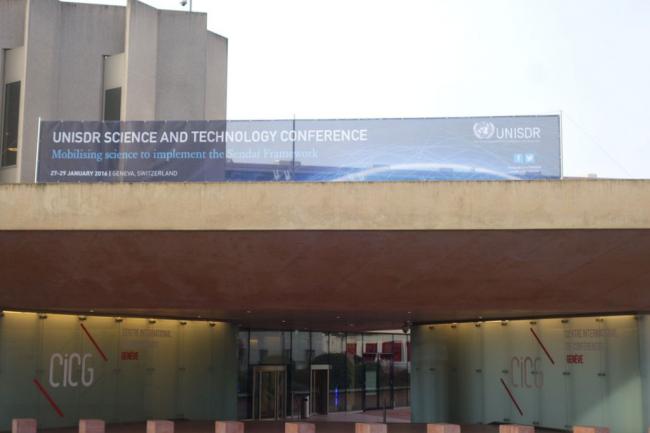
More than 1,000 scientists, politicians, policy makers, disaster risk managers and representatives of the business community will gather on Wednesday in Geneva for a three-day UNISDR Science and Technology Conference to mobilize the scientific community to implement the Sendai Framework for Disaster Risk Reduction. The Sendia Framework was adopted in March 2015 as a new global agreement on measures to reduce disaster risk and disaster losses.
Photo: UNISDR
Support Our Journalism
We cannot do without you.. your contribution supports unbiased journalism
IBNS is not driven by any ism- not wokeism, not racism, not skewed secularism, not hyper right-wing or left liberal ideals, nor by any hardline religious beliefs or hyper nationalism. We want to serve you good old objective news, as they are. We do not judge or preach. We let people decide for themselves. We only try to present factual and well-sourced news.
Support objective journalism for a small contribution.


