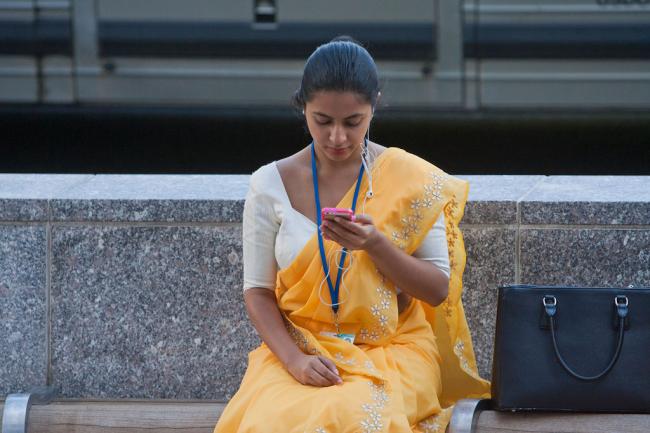
Teleworking may seem easier, but it could disrupt your work-life balance – UN reports
“This report shows that the use of modern communication technologies facilitates a better overall work-life balance,” said the Jon Messenger, co-author of the joint report by the UN International Labour Organization (ILO) and Eurofund.
The study, Working anytime, anywhere: The effects on the world of work is based on interviews with workers and experts in 10 European Union member states, Argentina, Brazil, India, Japan and the United States.
It highlights positive effects of teleworking, such as greater autonomy on working time and better work-day organization, and reduced commuting time resulting in a better overall work-life balance and higher productivity.
On the down side, teleworking “blurs the boundaries between work and personal life, depending on the place of work and the characteristics of different occupations,” Messenger said.
People teleworking have a tendency to work longer hours, and have higher levels of stress as a result of overlapping paid work and personal life.
As telework becomes more prominent so too has the need to disconnect in order to separate paid work and personal life, with France and Germany beginning to look at arrangements at the company level, and at existing and new legislation, such as the “right to be disconnected” (le droit à la déconnexion) in the most recent revision of the French Labour Code.
According to the report, there are distinctions between home-based teleworkers who seem to enjoy better work-life balance and 'high-mobile' workers who are more at risk of negative health and well-being outcomes.
The report recommends promoting formal part-time teleworking so that people working from home can maintain their ties with co-workers and improve their well-being.
Photo: World Bank/Simone D. McCourtie
Source: www.justearthnews.com
Support Our Journalism
We cannot do without you.. your contribution supports unbiased journalism
IBNS is not driven by any ism- not wokeism, not racism, not skewed secularism, not hyper right-wing or left liberal ideals, nor by any hardline religious beliefs or hyper nationalism. We want to serve you good old objective news, as they are. We do not judge or preach. We let people decide for themselves. We only try to present factual and well-sourced news.
Support objective journalism for a small contribution.