Terrorism diverts resources from ‘much-needed’ development to ‘costly’ security, warns UN envoy for Central Africa
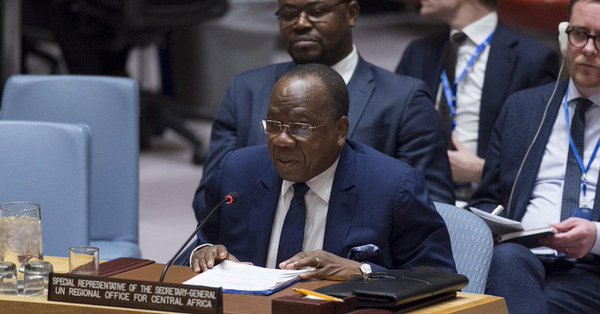
New York, June 14 (IBNS):The scourge of terrorism and violent extremism continues to affect all of Central Africa and divert government resources from much-needed development programmes to costly security operations, a senior United Nations official told the Security Council on Wednesday.
“Boko Haram and the Lord’s Resistance Army have not stopped their deadly attacks on civilians, committing egregious human rights abuses and causing countless victims,” said François Louncény Fall, the Special Representative and head of the UN Regional Office for Central Africa (UNOCA), referring to the main armed groups active in the sub-region.
Briefing the Council members on the Secretary-General’s semi-annual report on the activities of UNOCA, Fall stressed that his Office is engaging sub-regional organizations, including the Economic Community of Central African States (ECCAS), to fight Boko Haram and more broadly violent extremism.
Fall said that violent extremism, as well as persisting cross-border insecurity and criminal activities are compounded by the flow of small arms and light weapons throughout the sub-region, which covers Angola, Burundi, Cameroon, Central African Republic, Chad, Congo, Democratic Republic of the Congo, Equatorial Guinea, Gabon, Rwanda and Sao Tome and Principe.
In response to this challenge, the first Conference of States Parties to the Central African convention for the control of small arms and light weapons is taking place in Yaounde, in Cameroon, with the participation of UNOCA, he added.
On the political front, Fall noted that all 11 ECCAS member States are either midway or early in their respective electoral cycles and, as a result, experiencing civic tensions over the whole electoral process.
He said he had strengthened efforts in conflict prevention and crisis management in support of subregional organizations.
The request for UNOCA’s engagement, good offices of the Secretary-General, and preventive diplomacy remained strong, he said.
“Since its mandate was last renewed in 2015, UNOCA has proved its effectiveness as a tool to advance the Secretary-General’s prevention agenda in Central Africa,” Fall stressed, calling for the Council’s support to the renewal of UNOCA’s mandate for another three-year period, as recommended by the Secretary-General in his report.
Support Our Journalism
We cannot do without you.. your contribution supports unbiased journalism
IBNS is not driven by any ism- not wokeism, not racism, not skewed secularism, not hyper right-wing or left liberal ideals, nor by any hardline religious beliefs or hyper nationalism. We want to serve you good old objective news, as they are. We do not judge or preach. We let people decide for themselves. We only try to present factual and well-sourced news.
Support objective journalism for a small contribution.