 Thailand
Thailand: More than 100 companies pledge to strengthen women’s economic empowerment
New York: Chief executives of 110 companies in Thailand on Wednesday, have signed up to a new set of UN principles on women’s economic empowerment, pledging to improve gender equality in the boardroom, equal pay for equal work, and safer and more inclusive workplaces.
The Women’s Empowerment Principles (WEPs), established by UN Women and the UN Global Compact, offer guidance to businesses, regardless of their size or sector.
According to UN Women, Thailand has done “comparatively well” in terms of women occupying senior business roles. Across the country, 24 percent of chief executive officers (CEOs) and managing directors are women, compared to an Asia-Pacific average of 13 per cent. Globally that figure stands at about 20 per cent.
While the Asia-Pacific region has made impressive progress in reducing extreme poverty, with women helping to power growth, fully closing the gender equality gap could take another 100 years.
The ‘new normal’ shines a light on our common humanity, shared vulnerabilities, and it is only through a collective, collaborative recovery that a more gender equal society can be fully achieved – Mohammad Naciri, UN Women
Against this backdrop, UN Women’s WeEmpowerAsia initiative, aims to mobilize the private sector towards gender equality and increase women’s full and equal economic participation through implementing the WEPs. Its focus countries include China, India, Indonesia, Malaysia, the Philippines, Thailand and Viet Nam.
‘Bold, decisive action for equality’
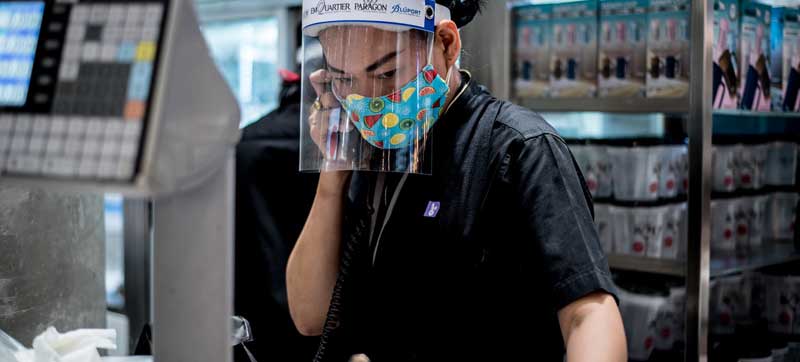
Amid the coronavirus pandemic, the region’s economies can create an opportunity for full recovery by building on the trend towards full equality, said Mohammad Naciri, Regional Director for Asia and the Pacific at UN Women.
Speaking at a physically-distanced signing ceremony in the Thai capital, Bangkok, Mr. Naciri called for “nothing less than bold, decisive actions to secure a generation of equality in business as well as women’s full and equal participation across all sectors.”
“The ‘new normal’ shines a light on our common humanity, shared vulnerabilities, and it is only through a collective, collaborative recovery that a more gender equal society can be fully achieved”, he added.
Globally, some 3,600 companies have committed to the WEPs, and prior to the ceremony on Wednesday, only 11 Thai companies had signed on, according to the UN gender equality agency.
Guiding principles
Established in 2010, the WEPs are based on international labour and human rights standards, grounded in the recognition that businesses have a stake in, and a responsibility for, gender equality and women’s empowerment.
Its seven principles include: establishing high-level corporate leadership for gender equality; treating all women and men fairly at work, without discrimination; ensuring health, well-being and safety of all workers; promoting education, training and professional development for women; implementing enterprise development, supply chain and marketing practices that empower women; promoting equality through community initiatives and advocacy; and measuring and reporting on progress towards gender equality.
Support Our Journalism
We cannot do without you.. your contribution supports unbiased journalism
IBNS is not driven by any ism- not wokeism, not racism, not skewed secularism, not hyper right-wing or left liberal ideals, nor by any hardline religious beliefs or hyper nationalism. We want to serve you good old objective news, as they are. We do not judge or preach. We let people decide for themselves. We only try to present factual and well-sourced news.
Support objective journalism for a small contribution.