UN anti-drug conference offers ‘opportunity to chart a better and balanced path’ forward – UN chief
New York, Mar 13 (JEN): Inclusive partnerships are essential to addressing drug challenges and achieving the Sustainable Development Goals (SDGs), according to the top United Nations panel dealing with all aspects of narcotic drugs.
"With the UN General Assembly special session consensus as our blueprint, we can promote efforts to stop organized crime while protecting human rights, enabling development and ensuring rights-based treatment and support," Secretary-General António Guterres said Monday in a video message at the opening session of the 61st Commission on Narcotic Drugs.
"I have called on the United Nations Office on Drugs and Crime [UNODC] to develop a comprehensive strategy that works across the three pillars with other UN entities to advance our efforts," he stressed, referring to the three main pillars of the UN's work – peace and security, human rights, and development.
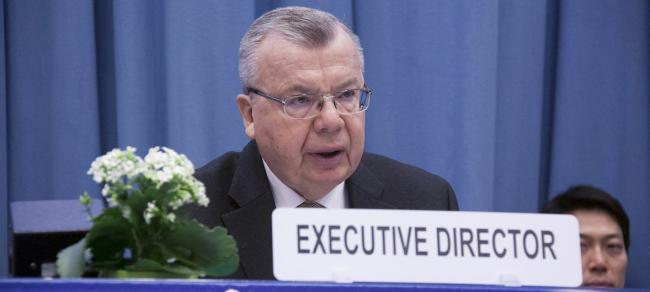
UNODC Executive Director Yury Fedotov said that throughout the coming year, the agency is looking forward to continuing its lead role in the UN’s strategic work on drug issues.
"The Commission on Narcotic Drugs has proven time and again its value in bringing the world together – Member States, UN agencies, regional organizations, civil society, young people and scientists," he said.
"The political commitment, expertise and experience gathered here represent a vital resource as we seek to find balanced, integrated solutions, drawing on the mutually supportive and reinforcing international drug control conventions and human rights obligations, and working towards the Sustainable Development Goals," Fedotov underscored.
The opening session was also addressed by the President of the International Narcotics Control Board, Dr. Viroj Sumyai, and featured a video message from WHO Director-General Tedros Adhanom Ghebreyesus.
“At this session, UNODC and WHO [the World Health Organization] will present a new report on treatment and care for people with drug use disorders in contact with the criminal justice system, and addressing alternatives to conviction or incarceration,” explained Fedotov.
Over the next week, the session, chaired by Ambassador Alicia Buenrostro Massieu of Mexico, will also consider a variety of resolutions, such as on combating the synthetic opioid crisis, strengthening drug prevention in schools and measures to prevent mother-to-child HIV transmission.
“UNODC remains committed to supporting you in all your efforts to improve balanced, evidence-based responses to the challenges to health, security, safety and development posed by drugs,” he concluded.
Along with the Commission on Crime Prevention and Criminal Justice, the Commission on Narcotic Drugs serves as the central policymaking body within the UN system on drugs. It is one of UNODC’s governing bodies, and its resolutions and decisions provide guidance to Member States, UNODC and the international community.
UNODC
Support Our Journalism
We cannot do without you.. your contribution supports unbiased journalism
IBNS is not driven by any ism- not wokeism, not racism, not skewed secularism, not hyper right-wing or left liberal ideals, nor by any hardline religious beliefs or hyper nationalism. We want to serve you good old objective news, as they are. We do not judge or preach. We let people decide for themselves. We only try to present factual and well-sourced news.
Support objective journalism for a small contribution.