UN approves largest-ever emergency funding allocation to scale up response in war-torn Yemen
New York, Jan 6 (JEN): Despite progress over the past month in opening Yemen’s Red Sea ports to commercial and aid shipments, the United Nations relief chief on Friday approved the largest-ever emergency relief allocation – $50 million – amid concerns that the humanitarian catastrophe in the war-raved country is being made worse by the recent increase in fighting and airstrikes.
“These funds will help to save lives,” declared UN Emergency Relief Coordinator Mark Lowcock as he announced that the funding would rapidly bolster the response for some 22 million people in Yemen who need humanitarian assistance, including more than eight million who are “a step away from famine.”
Since 2015, Yemen has been in engulfed a conflict between forces loyal to President Abdrabbuh Mansour Hadi and those allied to the Houthi rebel movement.
Lowcock emphasized that to roll back the unfolding catastrophe, three things need to happen.
“First,” he began, “there must be reduction both in fighting on the ground and airstrikes, which have greatly intensified in recent weeks.”
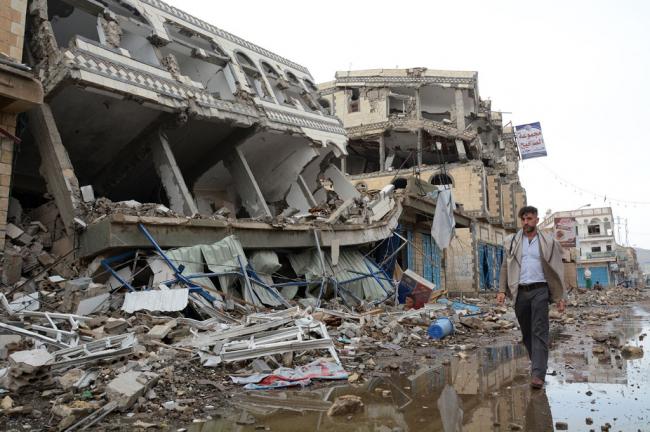
Armed conflict is killing and injuring people and destroying critical infrastructure. Danger and bureaucratic impediments hamper humanitarians’ ability to reach those in need, including those at risk of diphtheria – a growing outbreak now in most of Yemen’s governorates.
Lowcock maintained that “the parties to the conflict must comply with their obligations under international humanitarian law to protect civilians and civilian infrastructure,” and facilitate humanitarian partners.
“Second,” he continued, “we need all ports to remain open without interruption. Yemen imports about 90 per cent of its staple food and nearly all of its fuel and medicine […] a lifeline for millions of people.”
Moving forward, sustained and higher levels of food, fuel and medicines must be imported.
“Third,” he said, “we need faster and more generous donor financing.”
While aid saved millions in 2017, recent restrictions and intensified fighting have forced more reliance on aid.
“The CERF allocation on Friday will ensure a comprehensive, integrated response across life-saving humanitarian sectors for the most vulnerable people in 27 high-priority districts at risk of famine, as well as in areas where conflict has recently escalated,” he said.
“The Yemeni people need an end to the conflict so that they can begin to rebuild their lives. For this to happen, the parties to the conflict must cease hostilities and engage meaningfully with the UN to achieve a lasting political settlement,” he concluded.
Photo: OCHA/Philippe Kropf
Support Our Journalism
We cannot do without you.. your contribution supports unbiased journalism
IBNS is not driven by any ism- not wokeism, not racism, not skewed secularism, not hyper right-wing or left liberal ideals, nor by any hardline religious beliefs or hyper nationalism. We want to serve you good old objective news, as they are. We do not judge or preach. We let people decide for themselves. We only try to present factual and well-sourced news.
Support objective journalism for a small contribution.