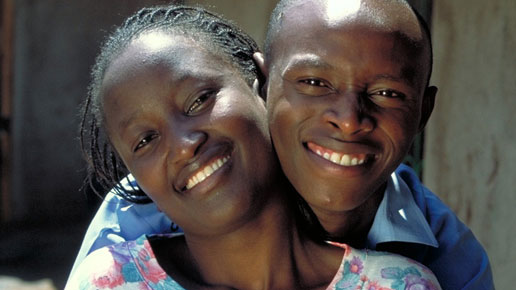
UN-backed AIDS conference closes with calls to end discrimination, bolster HIV care, support
"The Durban conference was marked by the phenomenal progress made over the last 15 years to [enhance people's lives] and expand access to treatment," said Loures in an interview with the UN News Service .
The International AIDS Conference, which opened Monday, 18 July, is the largest on any global health or development issue, and which met this year on the theme of Access, Equity, Rights, Now, was first convened during the peak of the AIDS epidemic in 1985.
The global AIDS response has since evolved, with the number of people with access to life-saving HIV treatment reaching 15 million by 2015. From 2002 to 2012, expanded access to HIV treatment averted 4.2 million deaths globally and contributed to a 58 per cent reduction in new HIV infections, according to UNAIDS, a co-organizer of the AIDS conference.
However, many of the obstacles that impeded effective HIV prevention and treatment programs in 2000 still exist, with more than 60 per cent of people living with HIV remaining without antiretroviral therapy.
Opening the Conference, UN Secretary-General Ban Ki-moon called for AIDS 2016, the meeting's shorthand moniker, to mark the commitment to a new era – the era of a fast-track response, which seeks to achieve the 90-90-90 targets by 2020: 90 per cent of people living with HIV know their HIV status, 90 per cent of people who know their HIV-positive status are accessing treatment and 90 per cent of people on treatment have suppressed viral loads.
This year, the conference focused on the work that remains to be done if the world is to achieve the global goal of ending AIDS by 2030. Nearly 18,000 delegates from 183 countries discussed strengthening treatment programs, prevention, HIV care and support; support for research on HIV/AIDS; the refusal of marginalization of vulnerable populations; the fight against discriminatory laws; and defense of HIV response centered on communities and rights-based.
“This conference was also marked by new challenges, one of which is the increase in new infections among the most vulnerable populations, including gay men, sex workers, migrants, prisoners and young women,” added the Deputy Executive Director of UNAIDS in his interview with the UN News Service.
Loures stressed that the main problem was not the disease itself, “because we have the knowledge and tools necessary to control it.”
“The biggest obstacle we face is beyond the epidemic of AIDS,” he said, pointing to the discrimination and stigma that act against vulnerable communities with high prevalence of the epidemic.
Moreover, the UNAIDS Deputy Executive Director stressed the need to maintain financial support to continue making progress in the fight against the epidemic. "Without this support, the world will be exposed in the future to a resurgence of the epidemic," he warned.
Photo: UN
Source: www.justearthnews.com
Support Our Journalism
We cannot do without you.. your contribution supports unbiased journalism
IBNS is not driven by any ism- not wokeism, not racism, not skewed secularism, not hyper right-wing or left liberal ideals, nor by any hardline religious beliefs or hyper nationalism. We want to serve you good old objective news, as they are. We do not judge or preach. We let people decide for themselves. We only try to present factual and well-sourced news.
Support objective journalism for a small contribution.