 COVID19
UN Development Programme urges temporary basic income for women hit hard by COVID-19 fallout
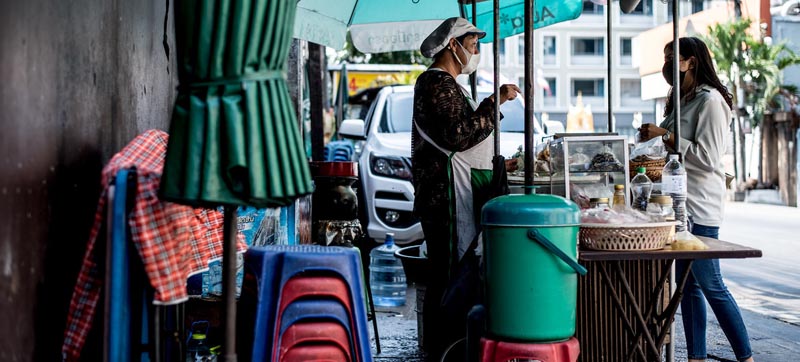
New York: The United Nations Development Programme (UNDP) has called for temporary basic income for millions of the world’s poorest women, to help them cope with effects of coronavirus pandemic and alleviate the economic pressures they face every day.
In a report released on Thursday, UNDP highlighted that the financial support could prevent rising poverty and widening gender inequality, especially in developing countries.
“Women have been harder hit than men by the pandemic, losing income and leaving the labour market at a greater rate and taking on a greater share of care work”, the agency said.
“A temporary basic income could provide financial security in the short-term paving the way for future investments that address systematic gender inequality”, it added.
According to UNDP, a monthly investment of 0.07 to 0.31 per cent of developing countries’ gross domestic product (GDP) could provide reliable financial security to 613 million working-aged women.
The amount is equivalent to $51 billion purchase power parity – the amount of money needed to purchase a basket of goods, factoring in different currency exchange rates across countries.
Ensuring survival in ‘unprecedented times’
Achim Steiner, head of UNDP, said that by redirecting the required amount to women in severe socio-economic stress, Governments can help ensure their survival amidst these unprecedented times.
“The benefits of such a meaningful investment could not only help women and their families absorb the shock of the pandemic, but also empower women to make independent decisions about money, livelihoods and life choices”, he highlighted.
Narrowing gender gap
In the report, issued ahead of this year’s International Women’s Day, UNDP underscored the need to act immediately to ensure women can access social protection schemes, as the COVID-19 crisis has affected women differently than men.
Jobs done by women around the world tend to be lower paid, if paid at all, often lack social protection and safety nets, and are predominately in the sectors affected most by the global lockdowns accompanying the coronavirus pandemic, the agency said.
Women have also taken on a greater share of unpaid work and have faced a surge of domestic violence with lockdowns forcing them to stay in unsafe homes.
Beyond supporting women to access their daily needs, the report stresses that the temporary basic income for women would also help narrow the gap between men and women who live in poverty and balance the control of economic resources within the household.
Support Our Journalism
We cannot do without you.. your contribution supports unbiased journalism
IBNS is not driven by any ism- not wokeism, not racism, not skewed secularism, not hyper right-wing or left liberal ideals, nor by any hardline religious beliefs or hyper nationalism. We want to serve you good old objective news, as they are. We do not judge or preach. We let people decide for themselves. We only try to present factual and well-sourced news.
Support objective journalism for a small contribution.