 UN Budget
UN General Assembly approves $3.72 billion budget for 2025
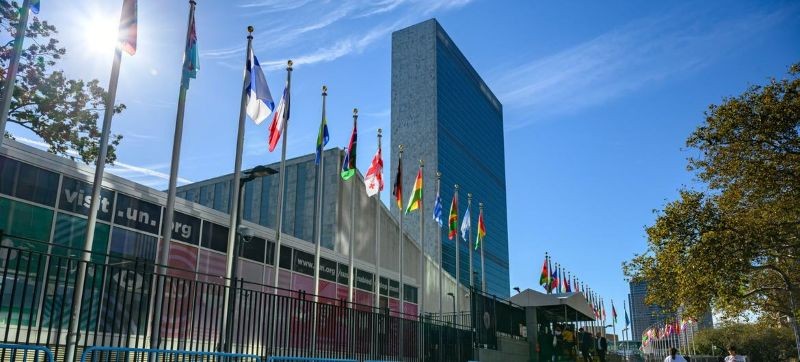
The General Assembly wrapped up the main part of its 79th session on Tuesday, approving a $3.72 billion budget for the United Nations in 2025 and adopting a new programme to support landlocked developing countries.
The approved $3.72 billion regular budget (RB) for 2025 represents an increase of about $1 million over the Secretary-General’s October proposal to the Assembly’s Fifth Committee, which oversees administrative and budgetary matters.
The regular budget funds UN programmes across key areas, including political affairs, international justice and law, regional cooperation for development, human rights and humanitarian affairs, and public information.
In addition, the Organization maintains a distinct budget for peacekeeping operations, with the fiscal cycle 1 July to 30 June, while the RB cycle aligns with the calendar year.
Programme of action for LLDCs
In a separate action, the General Assembly adopted the Programme of Action for Landlocked Developing Countries for the Decade 2024-2034, aiming to tackle the unique challenges faced by nations without direct access to open seas.
Landlocked developing countries (LLDCs) face significant hurdles in trade and development, relying on transit nations, which leads to higher trade costs, delays and reduced competitiveness in global markets.
The Programme of Action identifies five priorities: promoting sustainable economic growth through innovation and structural transformation, enhancing regional trade integration, improving transport connectivity, building climate resilience, and ensuring effective implementation strategies.
The new framework builds on the Vienna Programme of Action (2014-2024) and the Almaty Programme of Action (2003), which laid the groundwork for addressing the persistent obstacles plaguing LLDCs.
Support Our Journalism
We cannot do without you.. your contribution supports unbiased journalism
IBNS is not driven by any ism- not wokeism, not racism, not skewed secularism, not hyper right-wing or left liberal ideals, nor by any hardline religious beliefs or hyper nationalism. We want to serve you good old objective news, as they are. We do not judge or preach. We let people decide for themselves. We only try to present factual and well-sourced news.
Support objective journalism for a small contribution.