UN health agency takes steps to help improve data on stillbirths, maternal and neonatal deaths
According to the UN health agency, 2.7 million babies die within the first month of life, 2.6 million babies are stillborn, and over 300,000 women die in childbirth every year.
“We need to ensure all births and deaths are counted, and that we can understand what to do to prevent future deaths, no matter where they occur,” Ian Askew, Director of Reproductive Health and Research at WHO, said in a press briefing in Geneva.
Nearly all babies who are stillborn and half of all newborn deaths are not recorded in a birth or death certificate, making it a big challenge to timely and effectively tackle these tragedies without such documentation.
“By reviewing the causes of maternal and infant deaths countries can improve quality of health care, take corrective actions, and prevent millions of families from enduring the pain of losing their infants or mothers,” said Askew.
The first publication, the WHO Application of the International Classification of Disease-10 to deaths during the perinatal period (ICD-PM) aims at accurately capturing and classifying the causes and timing of stillbirths and neonatal deaths, as well as mother’s health condition.
Entitled Making Every Baby Count: Audit and Review of Stillbirths and Neonatal Deaths, the second publication zeros in on the reviews and investigation of the death data in order to identify and implement solutions to improve the situation.
Despite recent progress in preventing maternal deaths, much work remains advance. Therefore, the third publication, Time to respond: a report on the global implementation of maternal death surveillance and response, helps countries reinforce their maternal mortality review process in and outside hospitals.
“Every time a death is reviewed it has the potential to tell a story about what could have been done to save a mother and her baby,” said Dr Anthony Costello, Director of Maternal, Children’s and Adolescents’ Health at WHO.
Most stillbirths, maternal and neonatal deaths occur in lower and middle-income countries, especially in conflict zones. Sub-Saharan Africa and South Asia are the most affected regions, primarily because of weak health systems, according to Askew.
Meanwhile, WHO is participating in a global multi-partner effort to improve the quality of health information, including data on maternal and child health.
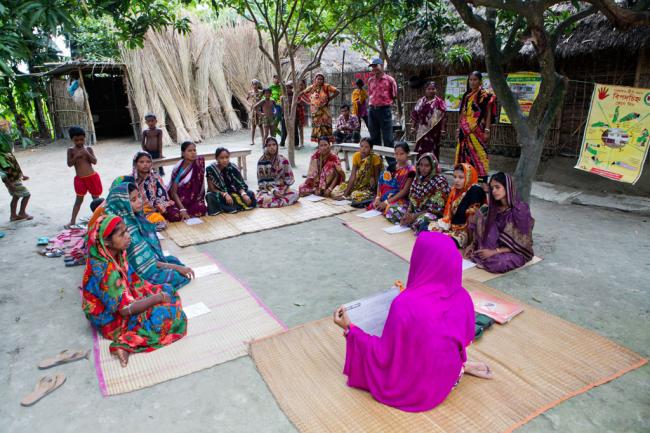
Photo: UNICEF/Tapash Paul
Source: www.justearthnews.com
Support Our Journalism
We cannot do without you.. your contribution supports unbiased journalism
IBNS is not driven by any ism- not wokeism, not racism, not skewed secularism, not hyper right-wing or left liberal ideals, nor by any hardline religious beliefs or hyper nationalism. We want to serve you good old objective news, as they are. We do not judge or preach. We let people decide for themselves. We only try to present factual and well-sourced news.
Support objective journalism for a small contribution.