UN ombudsperson solves problems in a 'cloak of confidentiality'
New York, Apr 20 (IBNS): Sometimes sparks can fly in the crossroads between creativity and conflict. For this reason, the United Nations has an Ombudsperson, who helps guide friction into productive solutions.
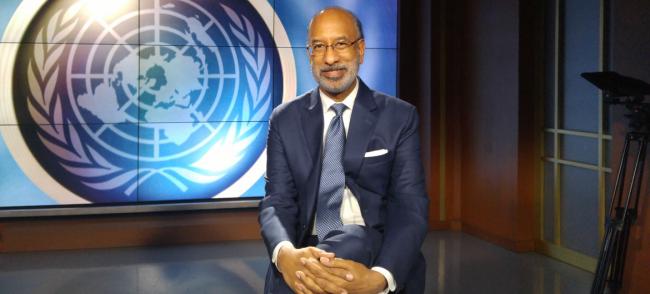
"When talented and diverse groups function together they produce rich and creative ideas. Yet, the same process can also result in conflict and tension,” said John Barkat, who has served as Ombudsperson for the last 10 years.
His belief is that “when handled productively,” conflict is a necessary and useful part of life.
As neutral and independent parties, these dedicated people assist UN employees to address their work-related concerns and help to resolve conflict through informal means – confidentially and off the record.
As Barkat finishes up his tenure with the Organization, he spoke to UN News, describing his job as “a designated neutral who works to help resolve issues involving any staff member in the UN System if they are facing a conflict, a bureaucratic challenge, or administrative problem.”
Using “the cloak of confidentiality to seek informal, independent assistance to resolve their conflict or issue,” he and his dedicated staff provide services to all staff, including former UN employees and retirees – regardless of their type of contract and location.
The office of the Ombudsperson does this through conflict coaching, giving feedback to UN offices, tracking the root causes of difficulties and proposing changes to minimize future disputes and create a more harmonious workplace.
There are some 30 people, working with national and international staff in the eight locations of Bangkok, Beirut, Entebbe, Geneva, Goma, Nairobi, New York and Vienna, all under the guidance of Barkat.
“On the systemic issues,” he said, “with each case we ask the question: ‘If you take away the people, who are involved in a conflict or a problem, what in the system would allow this situation to resurface in the future?’”The Office of the Ombudsperson, known in-house as UNOMS, works on three fundamental pillars, according to Barkat: “Helping to resolve issues; identifying systemic issues that cause the problems; and assisting in building skills with staff.”
After classifying whether a policy or procedural change would remedy the situation, he explained, “we provide feedback to the Organization so they can address the issue and possibly avoid future instances from frequently recurring.”
The Ombudsperson outlined that early systemic issues included redundancies in decisions made between headquarters and the field, which put people in limbo as they could not get clearances and kept some from being hired.
“I remember in one mission there were 70 cases where people had been in limbo for months to perhaps over a year. We were able to take those cases, identify the problems, help work with colleagues in New York and in the field and clear up those cases,” he elaborated.
Turning to the UN strategy to tackle sexual harassment, Mr. Barkat clarified that it not only affects the victims but also the accused and the bystanders.
He maintained that when sexual harassment involves UN staff, the Organization takes decisive action.
“The challenge is when it involves peacekeepers, and that is another issue of concern that the Organization has been addressing on various levels,” he said. “There’s good movement.”
When cases arise on alleged sexual harassment, he underscored that every victim deserves their voice to be heard in an appropriate forum; not all cases are the same; and everyone deserves due process.
“If we keep those in mind, then we will do well in moving forward in how we respond to these issues,” he said.
Living the dream
Working as an ombudsperson has been a dream come true for Barkat, who said he wanted to be “a peacemaker, to bring people together who might not be able to do that on their own.”
He has certainly had a multitude of opportunities as UNOMS processes over 2,500 cases a year in addition to numerous mediations.
Speaking about one mission where people felt they were unimportant and not being heard, Mr. Barkat expressed his deep fulfilment in resolving their conflicts – and reaffirming their importance as part of the UN family.
Support Our Journalism
We cannot do without you.. your contribution supports unbiased journalism
IBNS is not driven by any ism- not wokeism, not racism, not skewed secularism, not hyper right-wing or left liberal ideals, nor by any hardline religious beliefs or hyper nationalism. We want to serve you good old objective news, as they are. We do not judge or preach. We let people decide for themselves. We only try to present factual and well-sourced news.
Support objective journalism for a small contribution.