 Teacher
UN report highlights there is global shortage of teachers
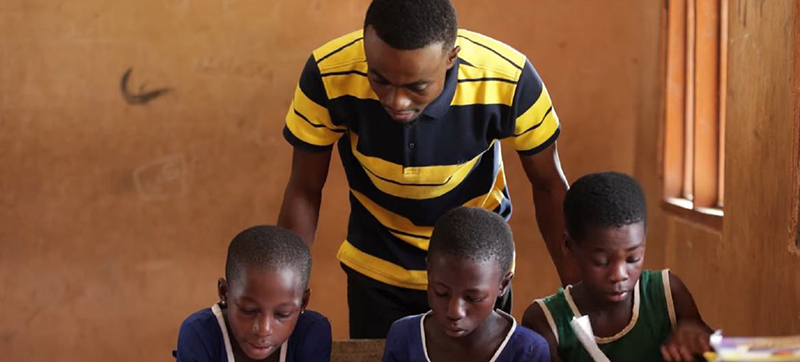
The world urgently needs 44 million teachers by 2030 in order to make the Sustainable Development Goals a reality, a new report from UNESCO, the UN agency championing education, announced this week.
The Global teacher shortage alert was issued at a meeting on Monday of the International Task Force on Teachers for Education in Johannesburg, South Africa, where the UN Secretary-General’s High-Level Panel on the Teaching Profession announced a new set of recommendations to safeguard future learning for all.
Quality education for ‘learning societies’
“Now, more than ever, we need to move towards learning societies. People everywhere need high-quality skills, knowledge and education. Above all, they need the best teachers possible,” UN chief António Guterres said in his video message to the forum.
Tweet URL
UNESCO points out that seven out of ten teachers at the secondary level will need to be replaced by 2030, along with over half of all existing teachers who will have left the profession by the decade’s end.
Although it’s a global issue, the teacher shortage is impacting sub-Saharan Africa the most, where an estimated 15 million new teachers are needed by 2030.
Teachers overwhelmed
The effect of a worldwide teacher shortage is profound, creating larger class sizes, overburdened educators, educational disparities, and financial strain on educational systems, impacting educational quality and access.
Building on the landmark UN Summit on Transforming Education in 2022 and supported jointly by the International Labour Organization (ILO) and UNESCO, the High-Level Panel’s recommendations are focused on six core aspects: dignity, humanity, diversity, equity and inclusion, quality, innovation and leadership, and sustainability.
Support to educators
“Just as teachers support us all, it’s time to support teachers. Let’s make sure they have the support, recognition and resources they need to provide quality, relevant education and skills for all,” UN chief António Guterres said, advocating for the wide implementation of the guidelines produced by the education experts.
Responses to the challenge include recommendations to cultivate an environment where teachers can drive educational change, foster critical thinking and promote modern learning skills.
The Panel advocates for teachers as collaborative partners rather than mere purveyors of knowledge. Adequate funding for education systems and technology integration are key, with a focus on supporting the use of digital learning and other technology.
Financing the future
Attrition rates among primary teachers almost doubled from 4.62 per cent globally in 2015 to 9.06 in 2022, with teachers often leaving the profession within the first five years, the report reveals.
According to recent estimates, financing additional teachers will cost $12.8 billion for universal primary education and $106.8 billion for universal secondary education.
In total, the annual additional financing needed to cover salaries at primary and secondary levels by 2030 is estimated at $120 billion, if Sustainable Development Goal 4 is to be reached envisaging “inclusive and equitable quality education and promote lifelong learning opportunities for all”.
“Getting there means investing in teacher training, establishing professional teaching standards, reflecting teachers’ voices in policy decisions, and creating national commissions to tackle teacher shortages,” Mr. Guterres said.
Support Our Journalism
We cannot do without you.. your contribution supports unbiased journalism
IBNS is not driven by any ism- not wokeism, not racism, not skewed secularism, not hyper right-wing or left liberal ideals, nor by any hardline religious beliefs or hyper nationalism. We want to serve you good old objective news, as they are. We do not judge or preach. We let people decide for themselves. We only try to present factual and well-sourced news.
Support objective journalism for a small contribution.