UN report shows global youth unemployment rate still above financial crisis levels
The rate has stabilized at 13 per cent following a period of rapid increase between 2007 and 2010, but it is still well above the pre-crisis level of 11.7 per cent, according to the ILO report Global Unemployment Trends for Youth 2015: Scaling up investments in decent jobs for youth. It also highlights a drop in the number of unemployed youth to 73.3 million in 2014, some 3.3 million less than the crisis peak of 76.6 million in 2009.
“It is encouraging to see an improvement in the youth employment trends compared to the GET [Global Employment Trends] for Youth 2013,” says Sara Elder, the report’s lead author.
“But we shouldn’t lose sight of the fact that recovery is not universal and that almost 43 per cent of the global youth labour force is still either unemployed or working yet living in poverty. It’s still not easy to be young and starting out in today’s labour market,” she added.
Because of a shrinking youth labour force, the youth unemployment rate remains high despite a decline in the number of unemployed youth, states the report, which notes that, according to projections, the rate is expected to increase slightly this year.
One reason for the decrease in the global share of youth in the total labour force, notes the report, is that more young people are participating in education. This is not the case in low-income countries, where millions of young people leave school early to take jobs.
According to the report, 31 per cent of youth in low-income countries have no educational qualifications at all, compared to 6 per cent in lower middle-income countries.
The report also notes the need to invest in skills and create decent work.
“We know that today’s youth do not face an easy labour market transition and with the continued global economic slowdown,” said Azita Berar Awad, Director of the ILO’s Employment Policy Department, adding “this is likely to continue, but we also know that greater investment in targeted action to boost youth employment pays off. It is time to scale up action in support of youth employment.”
“The 2030 Sustainable Development Agenda and its emphasis on youth employment in Goal 8, provides a new opportunity to mobilize broad global partnerships to support action on a more significant scale,” Berar Awad continued.
He added, “Increased investment is needed to alleviate the scars of the crisis on the present generation as well as to ensure more inclusive labour markets and societies.”
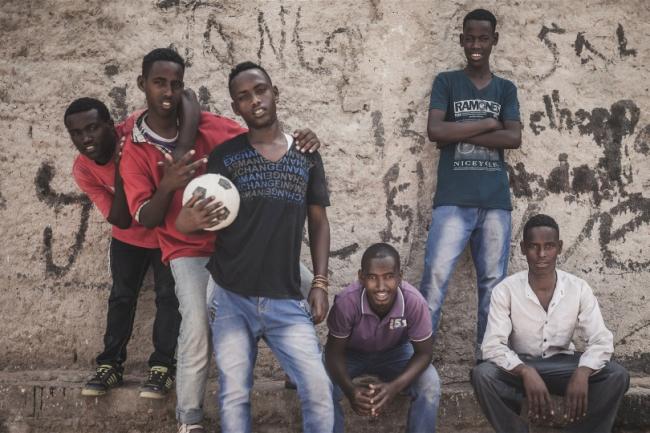
Photo: Adrian Leversby/IRIN
Support Our Journalism
We cannot do without you.. your contribution supports unbiased journalism
IBNS is not driven by any ism- not wokeism, not racism, not skewed secularism, not hyper right-wing or left liberal ideals, nor by any hardline religious beliefs or hyper nationalism. We want to serve you good old objective news, as they are. We do not judge or preach. We let people decide for themselves. We only try to present factual and well-sourced news.
Support objective journalism for a small contribution.