UN rights office expresses concern about death sentences in Bangladesh
Since its inception in 2010, the tribunal has delivered at least 17 verdicts, the majority of which have resulted in the imposition of the death penalty. So far, four men have been executed, according to the Office of the United Nations High Commissioner for Human Rights (OHCHR).
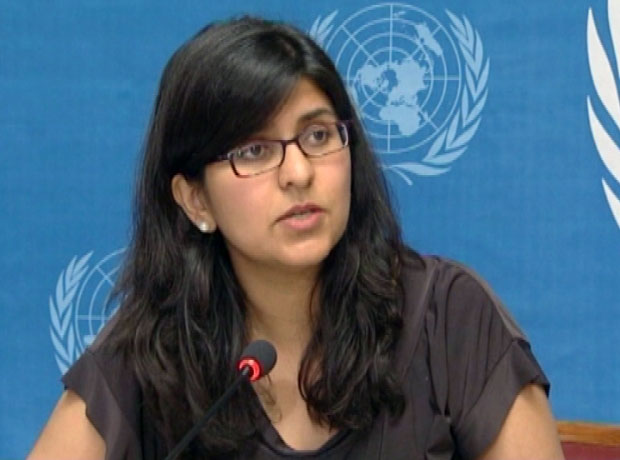
“The UN opposes the use of the death penalty in all circumstances, no matter the gravity of the crime committed and even if the most stringent fair trial standards were respected,” said Ravina Shamdasani, spokesperson for the UN High Commissioner for Human Rights.
While recognising Bangladesh's determination to tackle past crimes, the trials conducted before the Tribunal have unfortunately not met international standards of fair trial and due process as stipulated in the International Covenant on Civil and Political Rights (ICCPR), she said.
Serious due process problems, which have been repeatedly raised by various UN independent experts, include lack of adequate access to legal assistance and a lack of equality of arms between the prosecution and the defence, among other issues, she added.
OHCHR called on Bangladesh to respect its obligations under the ICCPR, to which it acceded in 2000. Article 14 of the ICCPR details the right to a fair trial. The imposition of a death sentence following a trial in which these provisions have not been respected constitutes a violation of the right to life.
The two leaders of the Jamaat-e-Islami opposition party who were given death sentences are Mir Quasem Ali and Motiur Rahman Nizami.
The former was sentenced to death in November 2014 by the Tribunal, and the Supreme Court also upheld the verdict on 8 March.
Nizami was sentenced to death on charges of planning, ordering and committing murders and rapes, among other serious crimes during the 1971 war of independence. He filed a review petition against his death warrant, due to be heard on Sunday, 10 April, following a one-week deferral. This is the last stage of the legal process in appealing against his execution, other than to seek a presidential pardon. “We hope it will be considered thoroughly by the court,” the spokesperson said.
Bangladesh reportedly has more than 1,200 prisoners on death row. In the month of March this year alone, at least 13 people were reportedly sentenced to death in separate murder cases in four districts in Bangladesh.
“We renew our call to the Government of Bangladesh, as a first step forward, to halt all executions and institute a moratorium on the use of the death penalty,” the spokesperson said.
Photo:UN Multimedia
Support Our Journalism
We cannot do without you.. your contribution supports unbiased journalism
IBNS is not driven by any ism- not wokeism, not racism, not skewed secularism, not hyper right-wing or left liberal ideals, nor by any hardline religious beliefs or hyper nationalism. We want to serve you good old objective news, as they are. We do not judge or preach. We let people decide for themselves. We only try to present factual and well-sourced news.
Support objective journalism for a small contribution.