UN’s advice for hospitals: Help mothers breastfeed to give babies best possible start in life
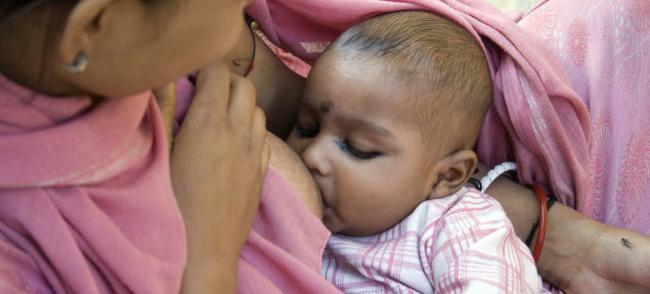
New York, Apr 12 (IBNS): Breastfeeding within the first hour of birth protects newborns from infections and saves lives, United Nations agencies said at the roll-out of their 10-step guidance to help new mothers and hospital workers embrace this practical advice and give children the best possible start in life.
The Ten Steps to Successful Breastfeeding, issued jointly by the UN Children’s Fund (UNICEF) and the World Health Organization (WHO), encourages new mothers to breastfeed and informs health workers how best to support breastfeeding.
“Breastfeeding saves lives,” said UNICEF Executive Director Henrietta Fore. “It’s benefits help keep babies healthy in their first days and last well into adulthood.”
Infants are at greater risk of death due to diarrhoea and other infections when they are only partially breastfed or not breastfed at all. Breastfeeding for the first two years would annually save the lives of more than 820,000 children under age five.
WHO Director-General Tedros Adhanom Ghebreyesus said that in many hospitals and communities around the world, whether or not a child is breastfed can make the difference between life and death, and whether a child will develop to reach his or her full potential.Breastfeeding also improves IQ, school readiness and attendance, and is associated with higher income in adult life. It is vital to a child’s lifelong health, and reduces costs for health facilities, families, and governments. It also reduces the risk of breast cancer in the mother.
“Hospitals are not there just to cure the ill. They are there to promote life and ensure people can thrive and live their lives to their full potential,” said Tedros.
The new guidance provides the immediate health system platform to help mothers initiate breastfeeding within the first hour and breastfeed exclusively for six months, and describes how hospitals should have in place a written breastfeeding policy, staff competencies, and antenatal and post-birth care, including breastfeeding support for mothers.
It also recommends limited use of breastmilk substitutes, rooming-in, responsive feeding, educating parents on the use of bottles and pacifiers, and support when mothers and babies are discharged from hospital.
WHO/SEARO/Anuradha Sarup
Support Our Journalism
We cannot do without you.. your contribution supports unbiased journalism
IBNS is not driven by any ism- not wokeism, not racism, not skewed secularism, not hyper right-wing or left liberal ideals, nor by any hardline religious beliefs or hyper nationalism. We want to serve you good old objective news, as they are. We do not judge or preach. We let people decide for themselves. We only try to present factual and well-sourced news.
Support objective journalism for a small contribution.