 Khalistan
Unravelling the drug pipeline from Pakistan to North America
The scourge of drug trafficking is a global crisis that respects no borders, devastating lives and communities across continents.
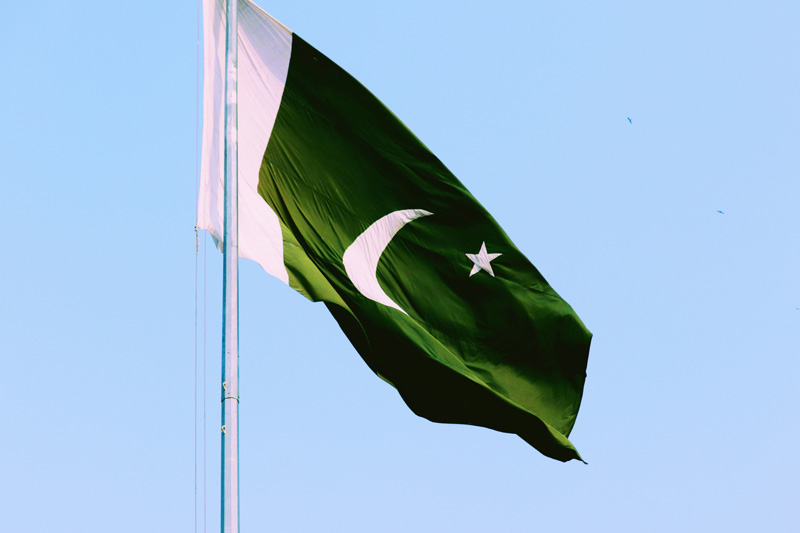
A concerning trend has emerged, highlighting a complex web of international drug trade that allegedly involves Pakistan as a significant nexus, with tendrils stretching to the West Coast of the United States and Canada. This network, purportedly facilitated by elements within the Pakistani establishment and exploited by various groups, underscores a multifaceted challenge that international law enforcement and policymakers face.
Drugs originating from Pakistan reportedly find their way to North American shores through a series of covert operations and clandestine routes. The journey of these narcotics often begins in the opium-producing fields of Afghanistan, from where they are smuggled across the porous Pakistan-Afghanistan border. Pakistan, with its strategic geographical location, serves not just as a transit country but also as a crucial node in the global drug trafficking network.
Three major trafficking routes have been identified by the UNODC in relation to opiate trafficking from Afghanistan: the Balkan route, which supplies Western and Central Europe through the Islamic Republic of Iran and Turkey via South-Eastern Europe; the southern route, through Pakistan and the Islamic Republic of Iran to the Gulf region, Africa, South Asia and, to a lesser extent, South-East Asia, Oceania and North America; and the northern route, through Central Asia to the Russian Federation.
Central to this are allegations involving the Inter-Services Intelligence (ISI) of Pakistan, which was confirmed by the then Prime Minister of Pakistan, Nawaz Sharif in a congressional hearing.
Another facet of this problem is the retired Pakistani military officers residing in Canada. Experts privy to such information claim that these retired officers are an integral part of the drug logistics chain.
These claims suggest a dark convergence of interests, where retired officers, purportedly with close ties to the ISI and the Pakistan Military, facilitate this nefarious trade across the Atlantic.
Adding another layer to this complex issue is the alleged involvement of truckers associated with the Khalistan extremist movement.
The claims suggest that these truckers are instrumental in distributing drugs across North American cities, with the proceeds purportedly funding the separatist movement.
This aspect introduces a geopolitical dimension, intertwining the drug trade with separatist aspirations and international diplomacy.
In just the past few months, there have been major drug busts in both the United States and Canada involving truckers of Punjab-origin.
The alleged drug pipeline from Pakistan to North America, with its multifaceted implications, underscores the urgent need for robust international cooperation and intelligence sharing. It’s a stark reminder of how criminal networks exploit geopolitical tensions and diaspora communities to further their agendas.
The international community must prioritize dismantling these networks, ensuring that efforts to combat drug trafficking do not inadvertently harm innocent civilians or exacerbate geopolitical tensions.
Addressing this crisis requires a concerted effort that goes beyond mere law enforcement. It necessitates addressing the root causes of drug production and trafficking, such as poverty, instability, and governance vacuums in producing countries.
Moreover, destination countries must focus on demand reduction through education, treatment, and rehabilitation programs.
Only through a holistic approach can the international community hope to dismantle the complex web of drug trafficking that spans continents.
While the allegations of a drug pipeline involving Pakistan, the ISI, retired military officers, and the Khalistan movement are grave, it’s crucial to navigate these claims with a commitment to justice, evidence, and nuanced understanding.
The fight against drug trafficking is not just a battle to be won but a societal issue that requires addressing the underlying socio-economic factors. As we shine a light on these shadowy networks, let us also commit to fostering a world where such networks find no refuge.
(Photo and text courtesy Khalsavox.com)
Support Our Journalism
We cannot do without you.. your contribution supports unbiased journalism
IBNS is not driven by any ism- not wokeism, not racism, not skewed secularism, not hyper right-wing or left liberal ideals, nor by any hardline religious beliefs or hyper nationalism. We want to serve you good old objective news, as they are. We do not judge or preach. We let people decide for themselves. We only try to present factual and well-sourced news.
Support objective journalism for a small contribution.